Wednesday, October 05, 2005

Rule No. 253 (borrowed from Esquire)

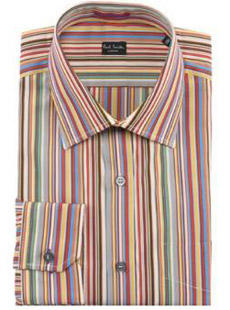
If you see a line outside a club or bar, before you queue up, count the number of men wearing striped button-down shirts. If that count numbers at least 75% of all sausages in line, move on.[1] That club screams "tools only."

[1] This rule does not apply to anyone holding an M.B.A., currently enrolled in business school, or planning to attend a business school.

Monday, October 03, 2005

The Talented Mr. Linkly

No, I have nothing better to do with this space than to pass off links that will open up whole new worlds of procrastination. In today's installment, I present the Implicit Association Test, which will purportedly measure your unconscious biases on race, gender, sexual orientation, age, political parties, and other discrete groups. Each bias is measured by a single test. I've taken three of these Harvard-devised babies, which run about eight minutes to take. And if the results are remotely accurate, it turns out I have a strong unconscious preference for Bill Clinton over George W. Bush (hardly a surprise), a slight association of Asian faces with Americans and white faces with foreigners (somewhat of a surprise, though growing up in an Asian-heavy neighborhood in the United States might help explain this counterintuitive response), and a slight unconscious preference for European-Americans over African-Americans (no, dammit!).

Quite interesting. Also interesting is Mike D'Angelo's post about the coming Singularity, which is either a more stunning revelation than "peak oil", global warming and "grey goo" combined, or the mere fabulous musings of a smart nutcase. I can't make up my mind just yet, though I look forward my new nano-tech exo-skeleton, which I hope will allow me to mentally control my molecules like The Sandman (or maybe Molecule Man). Beats the snot out of being Left Behind, in any event. Is it time to bet heavily on nanotech and genetic engineering stocks? Will we enter an phase in humanity where money won't matter anymore? Nothing to kill or die for? Will John Lennon be resurrected as a seer and saint? I wish I had some background in analyzing this idea's potential, but a few lower division college courses in each of evolution, biology, and general psychology just doesn't cut it.

MLB predix: Angels in 4, Red Sox in 4, Cards in 3, 'Stros in 4. Angels over Red Sox in 6; Astros over Cards in 7. Astros win the Series in 6.

Friday, September 23, 2005

Q. What is more addictive than crack?

Sudoku.

My best time for "easy" is 6 minutes 3 seconds. Haven't been able to master the harder levels, however.

Friday, September 16, 2005

Cutting and pasting through the last two weeks

1. Katrina.

Pretty much consumed my waking info-absorbing hours the last two weeks. I recommend the following links:

(a) Two excellent TNR articles. Noam Scheiber riffs on a NY Times article that tracked two families, one middle class and one poor, as they try to survive. The former landed on their feet, relying on "life skills" and connections that the couple accumulated through the years. The poor family was left behind. The article illustrates how impoverished folks who stayed didn't do so because they're morally bankrupt or lack intelligence per se, but mainly stems being born and stuck in a world where essential life skills, including something as seemingly basic as opening a bank account, were not needed, until you actually need 'em. It's the another dimension of poverty, that sociological estrangement from American society which middle class folk like me have a hard time understanding. The other is a wonkish attack on urban policymakers who think that edgy culture, haute cuisine, and nightlife are all that's needed to revitalize cities. I've happened upon this critique before, but having a real-life example makes it so much more powerful.

(b) Annoying as he sometimes can be, Andrew Sullivan might be the best blogger on the Katrina response, rightfully indignant and full of interesting e-mails from knowledgeable correspondents. Josh Marshall has been the top Republican corruption narc on net, and he's ever alert here, tracking what right now looks like a Karl Rove patronage operation that will be handing out $200 billion dollars to GOP cronies.

(c) This American Life, Episode 296 (9/9/05). Devastating. (Link is to RealPlayer file.)

(d) The most distressing news story of governmental malfeasance, even beating FEMA incompetence and cronyism? The police and sheriffs in white suburban Gretna, Louisiana, forming a line at the Mississippi River Bridge, firing their weapons in the air to prevent New Orleans evacuees from getting to safe, dry land. It's like something out of Cool Hand Luke. Billmon has more. Prepare to be outraged.

(d) Bush's failures: the NY Times op-ed page (R.I.P. NYT columnists); Dan Froomkin's White House Briefing; and the Daily Show, who came up with this killer Bush disaster checklist:

Dear God: Impeach Bush now before the coming yam shortage kills everyone on earth. Thank you.

2. John Roberts hearings.

Listening to the hearings off and on at work, and this dude is one smooth operator. Favorite exchange:

Senator Schumer: "It's as if I asked you what kind of movies you like. Tell me two or three good movies and you say, I like movies with good acting. I like movies with good directing. I like movies with good cinema photography. And I ask, no, give me an example of a good movie, you don't name one. I say, give me an example of a bad movies, you won't name one, and I ask you if you like Casablanca, and you respond by saying lots of people like Casablanca. You tell me it's widely settled that Casablanca is one of the great movies."

...Judge Roberts: "First, Doctor Zhivago, and North by Northwest."


(b) My thoughts on his confirmation pretty much align with this editorial.

(c) Wonkette's John Roberts-is-gay posts are a hoot. Tell me this doesn't trip your gaydar.

3. Recently seen films

(a) Everything Is Illuminated. The moving last couple of reels almost, but not quite, redeems this farrago of irritating quirks and derivative directorial gestures masquerading as an Eastern European road movie. Kind of a C-/B+ split. Or what he said.

(b) Proof: Miramaxed [mir'a-maksd]: adj. (1) a phenomenon by which a film, often a literary adapation, is compromised via pedestrian direction that underlines obvious themes, broad characterizations, a reduction of human complexity into easily digestible psychobabble, and above all, an unsuitable feel-good ending. (2) Any movie project that mandates at least three loving close-ups of Gwyneth Paltrow per minute.

(c) A Good Lawyer's Wife: These Korean movies might give this impression that Korean men are largely vapid, boozing, cheating wife-beaters. And that's not fai...uh, nevermind.
Moon So-ri confirms she's one of the bravest, greatest actresses currently working, even in this rather familiar film that lacks the emotional precision of Hong Sang-soo.

(d) Grizzly Man. Tell me Treadwell didn't trip your gaydar. And what he said.

(e) Three Outlaw Samurai (1964) & Goyokin (1969). There's something about the visual texture of b&w Tohoscope films from the 1960s that just slays me. Gosha's excellent Seven Samurai knockoff is no exception, a visual masterpiece of arresting compositions and exquisitely designed action. The soporific solemnity of his stylized color film Goyokin, however, left me literally conked out in my seat. Stephen Hunter differs, calling Goyokin Gosha's best work in perhaps the first American article featuring the neglected genre specialist.

4. Miscellaneous

(a) David Mamet on how learning poker can revive Democrats. Dave, bud, I wrote this piece ten months ago.

(b) Google new's Blogsearch engine (it powers the Blogger toolbar at the top of this page) sucks the hairy ass. As of now, it has only indexed posts dated June 2005 and thereafter. A search for any older postings will yield nothing. Dear Google: please leave your crappy search engine out of circulation until it's ready to go next time. Thanks.
Wednesday, September 14, 2005

Marty's favorite colors

I don't mean blood-red. To promote something for Philips, Martin Scorsese provided two lists of his favorite color-films, divided Sarris-like, into English-language and non-English. I'm posting it mainly because I find some of the choices bizarre and haven't seen this list linked by anyone else (David Hudson?):


English:
1. "Barry Lyndon" (1975, dir. Stanley Kubrick)

2. "Duel in the Sun" (1946, dir. King Vidor)
3. "Invaders From Mars" (1953, dir. William Cameron Menzies)
4. "Leave Her to Heaven" (1943, dir. John M. Stahl)
5. "Moby Dick" (1956, dir. John Huston)
6. "Phantom of the Opera" (1943, dir. Arthur Lubin)
7. "The Red Shoes" (1948, dir. Michael Powell)
8. "The Searchers" (1956, dir. John Ford)
9. "Singin' in the Rain" (1952, dir. Stanley Donen)
10. "Vertigo" (1958, dir. Alfred Hitchcock)

Foreign:
1. "Contempt" (1963, dir. Jean-Luc Godard)
2. "Cries and Whispers" (1972, dir. Ingmar Bergman)
3. "Gate of Hell" (1953, dir. Teinosuke Kinugasa)
4. "In the Mood For Love" (2000), dir. Wong Kar-Wai)
5. "The Last Emperor" (1987, dir. Bernardo Bertolucci)
6. "Red Desert" (1964, dir. Michelangelo Antonioni)
7. "The River" (1951, dir. Jean Renoir)
8. "Satyricon" (1969, dir. Federico Fellini)
9. "Senso" (1954, dir. Luchino Visconti)
10. "Shadows of Forgotten Ancestors" (1964, dir. Sergei Paradjanov)


Invaders from Mars and Moby Dick would make nobody's canon but Marty's, I suspect. And I've never even heard of this 1943 version of Phantom. Wtf? My overall impression is Marty goes ga-ga for broad melodramas in lurid colors like Duel in the Sun and Leave Her to Heaven, though it's kinda surprising the more accomplished bold melodramas in lurid colors from Sirk and Nick Ray didn't make the cut. Scorsese's possibly trying to promote lesser-known favorites here. Meanwhile, the foreign films betray a strong bias for movies that enforces a strict symbolic color scheme (Red Desert, Satyricon, Cries and Whispers), with an emphasis on primary colors. It's astonishing to see In the Mood For Love in there, but good job, Marty. One question: Is In the Mood the most canonized film since the turn of the century? My impression is yes, but I'm not an unbiased observer.

Sorry for another pointless list. A real post will arrive sometime soon, I hope. This is mainly a chance for me to sneak in a still from Contempt.

Saturday, August 20, 2005

Best Year in Movie History?

A couple years back, the Nuart, an arthouse/rep movie theater in LA, put on a series called "1962: Best Year in Movie History," which the programmers posed as a contrarian alternative to the commonly accepted annus mirabilis of cinema, 1939. That program included such immortal classics as The Manchurian Candidate and Lawrence of Arabia. Besides those two standouts, though, it's remarkable many well-known movies screened in that series: To Kill a Mockingbird, Whatever Happened to Baby Jane?, The Miracle Worker, Days of Wines and Roses. Those were screened alongside cineaste classics like Ride the High Country and Bergman's Through the Glass, Darkly (technically a 1961 movie released in the US in '62).

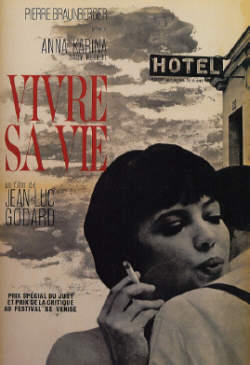
It's a staggering lineup. And that year's made more impressive when you take my favorite movies from that year, Chris Marker's La Jetée and Godard's Vivre sa vie, into account. This, by coincidence, I ended up seeing a batch of movies from 1962, including The Exterminating Angel, Advise and Consent, Hatari!, L'eclisse in that new Criterion edition. That gave me an opportunity to put together a top 10 list for this year for my previous top 10s page. Long story short: while devising that list, I had to conclude that, yes, 1962 is one amazing year for movies, giving birth to this post. I mean, check out this lineup:

01. La Jetée (Marker)
02. Vivre sa vie (Godard)
03. The Manchurian Candidate (Frankenheimer)
04. An Autumn Afternoon (Ozu)
05. Advise and Consent (Preminger)
06. The Exterminating Angel (Bunuel)
07. Lawrence of Arabia (Lean)
08. Knife in the Water (Polanski)
09. Ride the High Country (Peckinpah)
10. L'eclisse (Antonioni)
11. Hatari! (Hawks)
12. The Man Who Shot Liberty Valence (Ford)
13. Cléo from 5 to 7 (Varda)
14. Harakiri (Kobayashi)
15. Le Doulos (Melville)
16. Sanjuro (Kurosawa)
17. To Kill a Mockingbird (Mulligan)
18. Days of Wine and Roses (Edwards)
19. Lolita (Kubrick)
20. Hell is for Heroes (Siegel)

Just off are movies like Sundays and Cybele, Whatever Happened to Baby Jane?, Carnival of Souls, Losey's Eve, and Pasolini's Momma Roma. And the above list doesn't include the various acclaimed movies I haven't seen like Cape Fear, My Name is Ivan, Family Diary, The Music Man, I Fidanzati, Two Weeks in Another Town, These are the Damned, Loneliness of the Long Distance Runner, Zatoichi, The Trial of Joan of Arc, etc.

You might wondering, is there an actual point to this post besides nerdy navel-gazing on the level of an Auteurist Zombie thread? Well, not really. But I'll posit a theory to avoid the stench of unmitigated navel-gazing: It's true that using these "greatest year" debates rely on something essentially arbitrary -- the calendar year as the time interval of measurement. It's probably more instructive to look at a "great" year as a peak of a golden period, a burst of creativity and accomplishment that might last anywhere from two to five years. 1962, like other commonly-cited great years such as 1955, 1974, or 1939, aren't flukes. Those years instead mark a crest in an uncommonly fertile period for movies. For me, the early 60s stand out as the peak period for cinema because it's at the nexus of a number of developments: you have the Nouvelle Vague just exploding on the scene, the "mature" (not quite "late") period of classic Hollywood auteurs, the transition point between the Old Japanese Masters and the Japanese New Wave, and the intersection of Italian neo-realism and the Italian new wave, and generally a much greater willingness on the part of filmmakers to tackle political material. The remarkably fecund early Sixties marked a transition from an art form's classical period to its modernist period, a tantalizingly brief window of time where Ford and Godard share movie marquees.

1962 is the peak of that awesome period. That year included many elegiac, autumnal pictures like Ozu's last movie (appropriately titled) An Autumn Afternoon, John Ford's last great western Liberty Valence, Hatari!, which is probably the purest "Hawks movie" Hawks ever made, and his last great picture. Kubrick, Polanski, Bertolucci, Pasolini, and Peckinpah were just starting out, with both Polanski and Peckinpah making one of their very best. Bunuel made arguably his greatest picture The Exterminating Angel, the most potent lampooning of bourgeois dependence put on film. The two great modernist masters, Antonioni and Godard, were operating at the height of their powers. And the two most incisive, urgent political movies to ever come out of Hollywood were from this year: The Manchurian Candidate and Otto Preminger's compulsively watchable Advise and Consent, my pick as the most astutely observed movie about American politics ever made. And Jack Lemmon boozed it up and Bette Davis camped it up in two of their most memorable roles. It's a list filled with masterpieces and near-masterpieces, with some signature works by the artform's most luminous practioners.

So there you have it: an airtight case for 1962 as the greatest year in movie history. Your favorite movie year just doesn't match up. Sorry, nerd.