* L.A.-area movie nerds oughta subscribe to Film Radar, if they haven't done so already. Film Radar is a one-stop source for arthouse/revival movie listings, and if you're on the e-mail list, you often get invited to free screenings. Karie Bible, who runs the site/list, also organize movie nerd outings. Also, it's good for girlfriends of said nerds to subscribe, if only so they know where their boyfriend is supposed to be that night. ("Nice try, but according to Film Radar, the Ermanno Olmi double-header screens next week. And why do you have so many one dollar bills in your pocket?")
* For urban planning movie nerds (Adam?): my friend Julie needs your help. She's trying to program a film series about "homelessness, displacement, and gentrification", which will be shown to L.A.-area youth. She needs movie suggestions, and the films should be fairly accessible. The movies posted on the blog thus far sound like titles from Jonathan Rosenbaum's DVD collection, with Bresson's Mouchette and Vigo's Apropos de Nice listed, along with more on-point movies like City of Hope and Public Housing. Surely someone can help. If you have any ideas, go to the project's blog and post some recommendations. Or you can post nonsequitur remarks about how La Promesse rules. That's always a fun thing to do during a work break.
* Lastly, LA Times media critic David Shaw died of a brain tumor this week. He was the most provocative regular columnist for the Times, and his often astute, sometimes just plain cranky commentary will be missed.
Friday, August 05, 2005
Friday, July 29, 2005
5 x 3
5 recent viewings
War of the Worlds (Spielberg): B
The plant & payoff I expected never arrived: Tom Cruise, the gearhead with an engine on his kitchen table, did not miraculously locate a mechanical weakspot in the tripod and used that knowledge to defeat the aliens. Good job sticking to the ironic H.G. resolution. And the first hour is sheer sustained brilliance: like the devastating first act of The Pianist, you're put in the middle of an unfathomable assault on humanity, viewed through the eyes of one man. At its best, War is a totally immersive vision of a Hobbesian state of nature. Coming out of the movie, I can't help but ponder what a pittance my daily problems (that day it was losing my car keys) are when set against the possibility of civilization rupturing at the seams.
A pity the movie faltered so badly down the stretch. War ends up as a typical "late" Spielberg: superb visual storytelling of dark material that's undermined by a roasted marshmellow core. As with most of his recent works, Spielberg's unable to think through his premises and abandons the darker implications of his story in favor of canned explorations of the absent father/mother theme -- subjects on which Stevie has absolutely nothing left to say. Outside, tripods are disintegrating human flesh. In the basement, Cruise is trying to be a better father by singing lullabyes. Hackneyed development of "auteurial concerns" aside, the [SPOILERS!] Cambridge reunion ranks with the AI coda (sorry AI apologists, it's as "dark" as my bare ass), the Saving Private Ryan bookends, and Amistad's "give us free" as Spielberg's nadir -- they're scenes which betray an incorrigible taste for wishful thinking and hokey sentimentality. Also, note to Janucz Kaminski: Your trademark creepy backlighting is not needed to turn Dakota Fanning into the most freakish looking 11-year-old on earth. She already is. Thanks. (She has the mien of Bette Davis's Baby Jane aged backwards to eleven. Creepy as all hell.)
Land of the Dead (Romero): B+
20 years from now, when scholars dig through the cultural detritus of the Bush era, they would be well-served to ignore the 300 cheapo lefty docs on the shelves in favor of Romero's latest zombie movie, which is as potent a movie about the Iraq mess as one can imagine. The Green Zone. Abu Ghraib. Military contractors wrecking havoc. Relentlessly murderous insurgents with inchoate motivations. It's all here, and not done with a heavy hand. If only the actual zombie movie on the surface was more involving, we'd have an all-timer like Dawn of the Dead.
The Forest for the Trees (Abe): B/B-
Just moved to a new place and having trouble fitting in? Watch this movie and you'll discover every possible permutation of outsider alienation. Too mousy to rein in your students? Too idealistic and pompous to win over co-workers? Too socially awkward to mesh with the cool locals? Too socially unaware to not better disguise your stalking of a new friend? Like an adult version of Welcome to the Dollhouse, this theater of humiliation is well observed and ends well,but doesn't completely work -- mainly because it's grindingly repetitive but also because the heroine's behavior just wasn't very convincing. She alternately acts like someone who knows social rules but lacks social graces (making obvious lies to try to cover up her stalking) and someone utterly ignorant of social convention (hounding her New Best Friend as soon as she gets in her house door over the phone). Social nincompoops tend to be one or the other. Unless, of course, that social nincompoop happens to be a character in a movie that demands a progressively worse humiliation in each new scene.
The Last Laugh (Murnau, 1924): A [w/ J.Rocc]
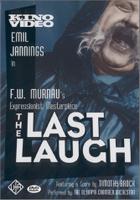 Purists might object to the LA Film Fest's program featuring live DJ scoring of silent classics in the majestic outdoor setting of the Ford Amphitheater, but a few missteps aside, I thought local DJ legend and Beat Junkie J.Rocc's live score of Murnau's silent classic was witty and thoughtful, if somewhat anachronistic. He'd have to starting mixing in Ja Rule to detract from Murnau's most expressionistic work, which ranks with Emil Jannings' The Blue Angel as the apogee of cinematic humiliation narratives. The centerpiece, a nightmare in which the gargoyles in the neighborhood go US Weekly on fallen doorman Emil Janning's ass, may be the greatest strech of filmmaking in Murnau's brilliant body of work and the most horrifying depiction of social humiliation put on film.
Howl's Moving Castle (Miyazaki): B+
So what if he's stealing from himself? Hey Ya! Miyazaki is one of a kind, and his latest visionary movie re-assembles previous Miyazaki tropes (castle, alienated girl, effete flying spirit guy, weird little creatures, transportation device that's "alive," pacifist message, stunning 19th century Dutch-looking cityscapes) to come up with a movie that's mostly involving and always stunning to behold, especially the background mattes of the Euro-city and the flower field.
Doesn't make a whole lotta sense and the ending's too maudlin, but it's awfully churlish to complain when you get cool shit like that transporting door or the awesome dog?
5 recent listens
Architecture in Helsinki w/ Scrabble @ The Echo - June 29, 2005
Cutesy childhood ditties shifting suddenly into emo navel-gazing that finally careens into anthemic catharsis. Architecture in Helsinki, like The Fiery Furnaces, are at the forefront of indie eclecticism -- and their show was a blast whenever they didn't give in to self-indulgence, as when the lead singer suddenly veers from delicate Belle & Sebastian whimsy to aping gravel-voiced Tom Waits in the same stanza. The raucously anti-harmonic horn section reminded me too much of the Stanfurd Marching Band for comfort, but overall I had a good time. As for the opener, Scrabble's songcraft and arrangements have gotten more sophisticated since the last time I saw them, but the sound system didn't treat 'em right that night.
David Byrne and Arcade Fire @ Hollywood Bowl - June 26, 2005.
Alternate title: Me and You and Everyone We Know. Half of LA was out for this show, and Arcade Fire stepped up to the challenge. Opening their set with the can of whupass that is "Wake Up", they just absolutely rocked the Bowl with that dense 9 piece sound, which included eight songs from Funeral and two new songs, and finishing the twin killing of "Tunnels" and "Power Out". In between, just sheer euphoria including a wrenching rendition of my favorite AF song, "In the Backseat", a song of shimmering, fragile beauty. David Byrne, decked out in a pastel pink suit, had a hard act to follow; first half of the dude's set was his solo stuff, which marries arch, child-like character sketches to an afro-beat sound. It was only when he broke out the Talking Heads' greatest hits ("Psycho Killer," "Burning Down the House") that the joint started buzzing, and the finish, a cover of Beyonce's "Crazy in Love," backed by a frenetic marching band, was against all odds, fucking awesome.
Guero, Beck
As many reviews have noted: Guero:: Odelay as Sea Changes :: Mutations. This is the first Beck album that doesn't surprise. I enjoy the experiments with latin rhythms and bossa nova beats, but mainly, it's Odelay redux. But what's wrong with repeating what's worked, even when you're Beck? Favorite tracks: "E-Pro" (so it sounds exactly like "Devil's Haircut"...your point is?) and "Girl".
Demon Days, Gorillaz
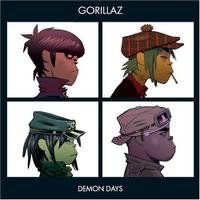 Fuck Blur. Gorillaz is where it's at. This sophomore album does what "side projects" do best -- takes chances, drains out the fat, and best of all, leaves the whiny posturing of 90s Britpop behind. This is just make catchy, funky pop. The production is less adventurous in this new album, the by-product of replacing beat genius Dan the Automator with the hyped-but-predictable DJ Danger Mouse, but they hit some smokin' highs here, including the Kanye West-inflected "Kids with Guns" and the killer bass line of "Every Planet We Reach is Dead." No sophomore slump here.
Be, Common
People who only listen to skinny sensitive white boy music are lame. Here's one reason why.
5 recent reads
Harrington on Hold'em, Vol. 2 - Endgame, by Dan Harrington and Bill Robertie.
Far and away the best book I've read on NL Hold'em play. What's great isn't learning new ideas, but the way Action Dan lucidly applies advanced NL principles to specific situations. Remember the pre-flop re-raise Action Dan made w/ 6-2 in the 2004 WSOP, getting AQ (David Williams) and an EP raiser (Josh Arieh) and MP caller (Greg Raymer) to fold? Genuflect before the intricate reasoning Dan goes through to arrive at this textbook "Squeeze Play" with everything on the line. Learn about the "M" and "Q" and making moves in the orange zone. Unfortunately, everyone else is doing the same: I see that both volumes of Harrington's treatise are on the Amazon top 50 bestseller list, ahead of David Sedaris, Jared Diamond, etc. Putting aside what that says about the poker craze, widespread dissemination of these potent ideas is definitely -EV, as poker nerds might say.
The Professor, the Banker and the Suicide King: Inside the Richest Poker Game of All Time, by Michael Craig
 Aspires to understand what makes the gambling mind tick, but Craig's much better when he drops the half-assed psychological musings for narrative. Andy Beal, a rich banker, challenges some of the greatest poker players in the world, including Doyle Brunson, Chip Reese, Jennifer Harman, Howard Lederer, et al. to games that reach $100,000/200,000 limit heads-up. Good to know that even the most famous poker pros lead crazy, rollercoaster lives, but Craig could never really get inside the action, and so the book's like a kung fu movie with the final confrontation cut out. You just don't get a sense of how the players played. A good glimpse into the lifestyle and relationships of these poker pros, but not enough game.
Freakonomics: A Rogue Economist Explores the Hidden Side of Everything
By Steven D. Levitt and Stephen J. Dubner
I'm only about halfway done with this book-of-the-moment, a pop econ tract that deals largely with the effectiveness of incentives as it's applied in weird scenarios -- sumo wrestling, KKK, etc.. Levitt's main concern is setting up incentives that would encourage or discourage cheating, but none of the revelations I've seen so far justifies the hyperbole of the subtitle. (But of course, I'm biased in that I find economists too often presume too much rationality in the decision-making and behavior of human actors) Thus far, Levitt lays out a lot of counterintuitive-but-not-so-upon-reflection points that's interesting but not mindblowing. Still, I'm glad to see someone put down real estate brokers (the real leeches of society). And I await the chapter that outlines his most provocative thesis, that legalization of abortion has brought down the crime rate (something I've always thought was intuitively correct, but glad to see some supporting data on).
Countdown to a Meltdown, by James Fallows in the Atlantic Monthly.
In a fictional memo to a 2016 presidential candidate almost certain to win, Fallow lays out an apocalyptic scenario tying together Iraq, currency policy, budget deficits, oil supply cutoffs by Hugo Chavez, China cashing out government bonds, environmental disaster, the real estate bubble, and our lagging education problems into a domino spiral. There's a terrifying logic to the scenario outlined therein that's all too plausible. And here I thought I was pessimistic about where the country is headed.
Climate of Man by Elizabeth Kolbert in The New Yorker. Part 1, Part 2, and Part 3. (Thanks to Phil in the comments section for the assist.)
Do yourself a favor. Print out all three parts, preferably on recycled paper. Or maybe the backside of drafts you were meaning to trash. Read all three parts. Thank you. Unless you've read it already, then which, holy fuck, this is some scary shit, eh?
War of the Worlds (Spielberg): B
The plant & payoff I expected never arrived: Tom Cruise, the gearhead with an engine on his kitchen table, did not miraculously locate a mechanical weakspot in the tripod and used that knowledge to defeat the aliens. Good job sticking to the ironic H.G. resolution. And the first hour is sheer sustained brilliance: like the devastating first act of The Pianist, you're put in the middle of an unfathomable assault on humanity, viewed through the eyes of one man. At its best, War is a totally immersive vision of a Hobbesian state of nature. Coming out of the movie, I can't help but ponder what a pittance my daily problems (that day it was losing my car keys) are when set against the possibility of civilization rupturing at the seams.
A pity the movie faltered so badly down the stretch. War ends up as a typical "late" Spielberg: superb visual storytelling of dark material that's undermined by a roasted marshmellow core. As with most of his recent works, Spielberg's unable to think through his premises and abandons the darker implications of his story in favor of canned explorations of the absent father/mother theme -- subjects on which Stevie has absolutely nothing left to say. Outside, tripods are disintegrating human flesh. In the basement, Cruise is trying to be a better father by singing lullabyes. Hackneyed development of "auteurial concerns" aside, the [SPOILERS!] Cambridge reunion ranks with the AI coda (sorry AI apologists, it's as "dark" as my bare ass), the Saving Private Ryan bookends, and Amistad's "give us free" as Spielberg's nadir -- they're scenes which betray an incorrigible taste for wishful thinking and hokey sentimentality. Also, note to Janucz Kaminski: Your trademark creepy backlighting is not needed to turn Dakota Fanning into the most freakish looking 11-year-old on earth. She already is. Thanks. (She has the mien of Bette Davis's Baby Jane aged backwards to eleven. Creepy as all hell.)
Land of the Dead (Romero): B+
20 years from now, when scholars dig through the cultural detritus of the Bush era, they would be well-served to ignore the 300 cheapo lefty docs on the shelves in favor of Romero's latest zombie movie, which is as potent a movie about the Iraq mess as one can imagine. The Green Zone. Abu Ghraib. Military contractors wrecking havoc. Relentlessly murderous insurgents with inchoate motivations. It's all here, and not done with a heavy hand. If only the actual zombie movie on the surface was more involving, we'd have an all-timer like Dawn of the Dead.
The Forest for the Trees (Abe): B/B-
Just moved to a new place and having trouble fitting in? Watch this movie and you'll discover every possible permutation of outsider alienation. Too mousy to rein in your students? Too idealistic and pompous to win over co-workers? Too socially awkward to mesh with the cool locals? Too socially unaware to not better disguise your stalking of a new friend? Like an adult version of Welcome to the Dollhouse, this theater of humiliation is well observed and ends well,but doesn't completely work -- mainly because it's grindingly repetitive but also because the heroine's behavior just wasn't very convincing. She alternately acts like someone who knows social rules but lacks social graces (making obvious lies to try to cover up her stalking) and someone utterly ignorant of social convention (hounding her New Best Friend as soon as she gets in her house door over the phone). Social nincompoops tend to be one or the other. Unless, of course, that social nincompoop happens to be a character in a movie that demands a progressively worse humiliation in each new scene.
The Last Laugh (Murnau, 1924): A [w/ J.Rocc]
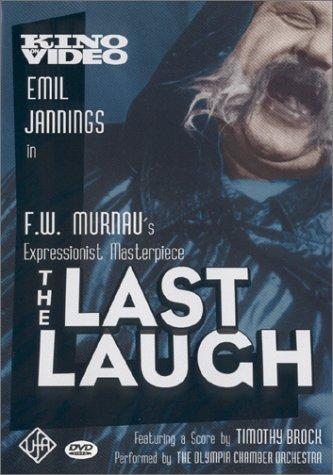 Purists might object to the LA Film Fest's program featuring live DJ scoring of silent classics in the majestic outdoor setting of the Ford Amphitheater, but a few missteps aside, I thought local DJ legend and Beat Junkie J.Rocc's live score of Murnau's silent classic was witty and thoughtful, if somewhat anachronistic. He'd have to starting mixing in Ja Rule to detract from Murnau's most expressionistic work, which ranks with Emil Jannings' The Blue Angel as the apogee of cinematic humiliation narratives. The centerpiece, a nightmare in which the gargoyles in the neighborhood go US Weekly on fallen doorman Emil Janning's ass, may be the greatest strech of filmmaking in Murnau's brilliant body of work and the most horrifying depiction of social humiliation put on film.
Howl's Moving Castle (Miyazaki): B+
So what if he's stealing from himself? Hey Ya! Miyazaki is one of a kind, and his latest visionary movie re-assembles previous Miyazaki tropes (castle, alienated girl, effete flying spirit guy, weird little creatures, transportation device that's "alive," pacifist message, stunning 19th century Dutch-looking cityscapes) to come up with a movie that's mostly involving and always stunning to behold, especially the background mattes of the Euro-city and the flower field.
Doesn't make a whole lotta sense and the ending's too maudlin, but it's awfully churlish to complain when you get cool shit like that transporting door or the awesome dog?
5 recent listens
Architecture in Helsinki w/ Scrabble @ The Echo - June 29, 2005
Cutesy childhood ditties shifting suddenly into emo navel-gazing that finally careens into anthemic catharsis. Architecture in Helsinki, like The Fiery Furnaces, are at the forefront of indie eclecticism -- and their show was a blast whenever they didn't give in to self-indulgence, as when the lead singer suddenly veers from delicate Belle & Sebastian whimsy to aping gravel-voiced Tom Waits in the same stanza. The raucously anti-harmonic horn section reminded me too much of the Stanfurd Marching Band for comfort, but overall I had a good time. As for the opener, Scrabble's songcraft and arrangements have gotten more sophisticated since the last time I saw them, but the sound system didn't treat 'em right that night.
David Byrne and Arcade Fire @ Hollywood Bowl - June 26, 2005.
Alternate title: Me and You and Everyone We Know. Half of LA was out for this show, and Arcade Fire stepped up to the challenge. Opening their set with the can of whupass that is "Wake Up", they just absolutely rocked the Bowl with that dense 9 piece sound, which included eight songs from Funeral and two new songs, and finishing the twin killing of "Tunnels" and "Power Out". In between, just sheer euphoria including a wrenching rendition of my favorite AF song, "In the Backseat", a song of shimmering, fragile beauty. David Byrne, decked out in a pastel pink suit, had a hard act to follow; first half of the dude's set was his solo stuff, which marries arch, child-like character sketches to an afro-beat sound. It was only when he broke out the Talking Heads' greatest hits ("Psycho Killer," "Burning Down the House") that the joint started buzzing, and the finish, a cover of Beyonce's "Crazy in Love," backed by a frenetic marching band, was against all odds, fucking awesome.
Guero, Beck
As many reviews have noted: Guero:: Odelay as Sea Changes :: Mutations. This is the first Beck album that doesn't surprise. I enjoy the experiments with latin rhythms and bossa nova beats, but mainly, it's Odelay redux. But what's wrong with repeating what's worked, even when you're Beck? Favorite tracks: "E-Pro" (so it sounds exactly like "Devil's Haircut"...your point is?) and "Girl".
Demon Days, Gorillaz
 Fuck Blur. Gorillaz is where it's at. This sophomore album does what "side projects" do best -- takes chances, drains out the fat, and best of all, leaves the whiny posturing of 90s Britpop behind. This is just make catchy, funky pop. The production is less adventurous in this new album, the by-product of replacing beat genius Dan the Automator with the hyped-but-predictable DJ Danger Mouse, but they hit some smokin' highs here, including the Kanye West-inflected "Kids with Guns" and the killer bass line of "Every Planet We Reach is Dead." No sophomore slump here.
Be, Common
People who only listen to skinny sensitive white boy music are lame. Here's one reason why.
5 recent reads
Harrington on Hold'em, Vol. 2 - Endgame, by Dan Harrington and Bill Robertie.
Far and away the best book I've read on NL Hold'em play. What's great isn't learning new ideas, but the way Action Dan lucidly applies advanced NL principles to specific situations. Remember the pre-flop re-raise Action Dan made w/ 6-2 in the 2004 WSOP, getting AQ (David Williams) and an EP raiser (Josh Arieh) and MP caller (Greg Raymer) to fold? Genuflect before the intricate reasoning Dan goes through to arrive at this textbook "Squeeze Play" with everything on the line. Learn about the "M" and "Q" and making moves in the orange zone. Unfortunately, everyone else is doing the same: I see that both volumes of Harrington's treatise are on the Amazon top 50 bestseller list, ahead of David Sedaris, Jared Diamond, etc. Putting aside what that says about the poker craze, widespread dissemination of these potent ideas is definitely -EV, as poker nerds might say.
The Professor, the Banker and the Suicide King: Inside the Richest Poker Game of All Time, by Michael Craig
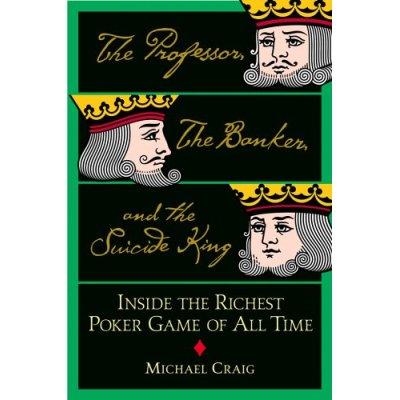 Aspires to understand what makes the gambling mind tick, but Craig's much better when he drops the half-assed psychological musings for narrative. Andy Beal, a rich banker, challenges some of the greatest poker players in the world, including Doyle Brunson, Chip Reese, Jennifer Harman, Howard Lederer, et al. to games that reach $100,000/200,000 limit heads-up. Good to know that even the most famous poker pros lead crazy, rollercoaster lives, but Craig could never really get inside the action, and so the book's like a kung fu movie with the final confrontation cut out. You just don't get a sense of how the players played. A good glimpse into the lifestyle and relationships of these poker pros, but not enough game.
Freakonomics: A Rogue Economist Explores the Hidden Side of Everything
By Steven D. Levitt and Stephen J. Dubner
I'm only about halfway done with this book-of-the-moment, a pop econ tract that deals largely with the effectiveness of incentives as it's applied in weird scenarios -- sumo wrestling, KKK, etc.. Levitt's main concern is setting up incentives that would encourage or discourage cheating, but none of the revelations I've seen so far justifies the hyperbole of the subtitle. (But of course, I'm biased in that I find economists too often presume too much rationality in the decision-making and behavior of human actors) Thus far, Levitt lays out a lot of counterintuitive-but-not-so-upon-reflection points that's interesting but not mindblowing. Still, I'm glad to see someone put down real estate brokers (the real leeches of society). And I await the chapter that outlines his most provocative thesis, that legalization of abortion has brought down the crime rate (something I've always thought was intuitively correct, but glad to see some supporting data on).
Countdown to a Meltdown, by James Fallows in the Atlantic Monthly.
In a fictional memo to a 2016 presidential candidate almost certain to win, Fallow lays out an apocalyptic scenario tying together Iraq, currency policy, budget deficits, oil supply cutoffs by Hugo Chavez, China cashing out government bonds, environmental disaster, the real estate bubble, and our lagging education problems into a domino spiral. There's a terrifying logic to the scenario outlined therein that's all too plausible. And here I thought I was pessimistic about where the country is headed.
Climate of Man by Elizabeth Kolbert in The New Yorker. Part 1, Part 2, and Part 3. (Thanks to Phil in the comments section for the assist.)
Do yourself a favor. Print out all three parts, preferably on recycled paper. Or maybe the backside of drafts you were meaning to trash. Read all three parts. Thank you. Unless you've read it already, then which, holy fuck, this is some scary shit, eh?


Thursday, July 21, 2005
On not being a completist
Richard Linklater's a gifted director of actors and a master of light comic timing. Billy Bob is one of the great actors. But why am I more motivated to plunk down $10 to watch the Butterscotch Stallion and his buddy crash weddings than to behold a collaboration of two modern American masters? Likewise, Tim Burton and Johnny Depp are both visionaries, but the buzz does not make his new movie enticing.
Last few years, I've really stopped being a total zombie completist. Avoided Spielberg's crappy looking The Terminal, the Coens' unpopular The Ladykillers (first C Brothers pic I've missed, ever), Bertolucci's The Dreamers (though I've always planned that as a rental). Burton's last movie, Big Fish, was the first of his I've missed. Ever.
So the question is, is it my problem for not demonstrating more Bush-like loyalty to filmmakers who've brought me comfort and joy my whole life? Or am I right to not reward esteemed filmmakers for putting out obvious mediocrity, or for casting Tom Hanks? It's a question I'm pondering as I decide on what to watch this weekend. (Answer: Tropical Malady a 2nd time most likely, and maybe a couple of Don Siegel movies at UCLA.)
Could it be that the answer is neither? One problem with completism is that the older you get, the more fan-fetish objects you start accumulating, and they eventually end up swamping you. I own every R.E.M. album up to New Adventures in Hi-Fi. Before I purchased Hi-Fi, I hadn't been too impressed with the bits I've heard. But at the time, I told myself, well, I'm a fan. I gotta support. And it might grow on me, like Out of Time did. (It could still be the case, since I haven't spun that disc in 5 years.) But in retrospect, I realized my reasoning was pure rationalization. What compelled me to pick up the R.E.M. album wasn't so much dutiful fanboyism as trying to avoid that vague, irritating feeling of incompleteness, the kind of you might have when you discover that they're out of Daiquiri Ice at Baskin-Robbins, even though you'd planned on getting Rocky Road anyway. Or being displeased that the Oxygen Network is not on your basic cable package, even though you'll probably never watch that a minute of programming on that channel, ever. It's not that you need to experience what you're missing; you simply need it not to be missing. When you grow up collecting comics, as I did, the completism becomes hard-wired into you: you end up devoting way more time to plotting out ways to score that hard-sought near-mint copy of X-Men 121 to complete your Claremont/Byrne run of X-Men than is healthy for a fourteen year old. As with that R.E.M. album, you're bound to pick up the latest fill-in-the-blank simply because it'll gnaw at your insides if you don't have it.
That impulse towards completism hasn't quite changed. But it's just too damned hard to keep up. It's one thing to pick up all the Impulse-label original-issue Coltranes or watch every Bresson picture, since there's only a handful of those. But staying on top of contemporary pop culture is basically a full-time job, especially if you have to juggle following your old heroes *and* trying to discover new acts/directors/writers. I'm not really sure what R.E.M. is up to these days. I haven't seen the last four Woody Allen movies. I've dropped Abbas Kiorastami but picked up Claire Denis. And I'll probably drop Denis for someone else five or six years down the line. At some point you can't watch everything your 50 favorite current filmmakers put out and have time for that lesbian movie playing at Laemmle. One has to choose. And I guess I choose to drop Linklater and Burton for the time being.
Also: Adam, back from his trip, posed an interesting question for me down in the Pascal thread which I hope to answer soon. Thanks for waiting, Adam.
Tuesday, July 19, 2005
SCOTUS: No $
Dammit. Bush fucked me over again. Roberts instead of Luttig. Aren't these two the same guy, for all intents and purposes? As for the nominee, John G. Roberts, Supreme Court expert Jeffrey Rosen's piece (on potential nominees) makes him out to be someone tolerable, someone with a judicious temperament, and not someone likely to be a wild-eyed right-wing judicial activist or a constitution-in-exile looney. Obviously he's quite conservative, but it's not as if Bush is gonna appoint Laurence Tribe.
Today's one of those days where I'm reminded of the old pre-Bush days, when knee-jerk lefties would drive me batty. The majority of commenters on the Daily Kos are already girding themselves for a fight to death on Roberts, demanding a fillibuster. Do they not realize that Kerry lost the election, and that of the potential nominees, Roberts is actually not among the worst? You only torpedo candidates that are truly outside the mainstream, and given how far right this country is at the moment, Roberts, from what I can tell, is not in Freeperland. Unless he's got skeletons in the closet or completely botches the confirmation hearings, let him go. There's bigger fish, or rather turd, to fry. Will nuking this nomination help the Dems win in 2006? Somehow, I don't think so, unless a dead male Russian ice skater is found naked in his bed.
Addendum: Today's NY Times gives a triple blow job to Roberts. But taken together, Rosen's piece and this lengthy profile make Roberts sound like as good a nominee as any non-wingnut could've hoped for from Bush, someone who has a healthy respect for the limits of the courts, and who has no history of being a radical activist ideologue. But will someone please hand David Brooks a tissue? Thanks.
SCOTUS: $$$
After missing out on the $20 Clement buy last night (she shot up to $70 before landing with a thud at $15 just now), I bought Luttig at $5 and Gonzales at $4, while the price was heavy on wingnut Edith Jones. (I am talking about possible Supreme Court nominees, which Bush will make tonight.) I can make a cool $200 if the pick is Luttig. Let it be so.
Tradesports. Day trading for info-junkies. Wishful thinking hot tip: Rove resigning by September 30th contract is at about $20.00.* If grand jury indictments are handed down by then, that'll be a smart buy. Another good gamble: 3rd party candidate winning the presidency in 2008. It's selling for about $1, meaning you can make about $1,000 on a $10 investment if McCain somehow makes a 3rd party run and wins.
* Here's how Tradesports works: It's like the stock market, except the contracts offered expire when the event predicted either comes to pass or doesn't. If it comes to pass, the contract will mature at $100.00. If it doesn't, than zero. For example, if Rove has resigned by September 30, you'll make $100.00 per share on a $20.00 per share purchase. If Rove hasn't resigned by then, it goes to zero and you lose your "investment". In the meantime, you can, of course, sell your contract for a profit if the price goes up. If rumors fly that Rove is about to be indicted, that contract will surely shoot up in price. I made a little money on Phil Ivey's WSOP contract when it went from $10 to $30 when I sold it on Day 5, but lost all of my profits when I used that money to buy John Juanda WSOP contract.
Wednesday, July 06, 2005
the politics of abortion
As usual, Will Saletan's right on the money: overturning Roe v. Wade is bad politics for the GOP, but putting greater restrictions on abortion is good politics. As the court stands now, adding an anti-Roe justice to replace O'Connor will only move the court towards more abortion restrictions, not an outright reversal of Roe. Only if John Paul Stevens steps down during Bush's term will Roe really be in danger. The math being what it is, Bush can keep nominally pro-choice Alberto Gonzalez on the backburner until his hand is forced.
The Democrats are cleverly triangulating, hoping to provoke a Gonzalez nomination with the atteendant wingnut outcry. But really, nothing would be better politically for Democrats than to have Roe overturned by some right-wing judicial activist (yes, judicial activists tend to be the right-wing guys) that Bush is likely to nominate. When I canvassed in Ohio in November, folks would go up to Ben, who was running for Congress, and immediately ask him where he stood on abortion. No questions on health care or jobs in a state coughing up jobs by the thousands. It's all about one issue. Right now, you have many more one-issue pro-lifers than pro-choicers; their intensity is based on the injustice of living in a country that condones the killing of fetuses. That intensity helps the Republican Party, which uses the religious right as "foot soldiers" to gain votes while pursuing an agenda bent on crony capitalism. The wildly successful exploitation of the religious right by the business elite is at the heart of the GOP's electoral success the last four years. Roe gets overturned, and all of a sudden it's a free for all. The pro-choice forces get their intensity back, and the moderate (largely pro-choice w/ restrictions types) will care about the issue again.
Roe isn't great law to begin with. Let it go and organize to get pro-choice legislation passed instead.
Tuesday, July 05, 2005
Pascal's The Wager
One idle moment a week or so ago, I sat around pondering Pascal's "The Wager". For those unfamiliar with the idea, the Wager is an attempt by Pascal in his Pensées to prove that belief in god is more reasonable than nonbelief. His argument has an elegant simplicity, which can be summed up with the following box (forgive the crude formatting):
God Exists :::::::: God Does Not Exist
Win infinity ::::::::: Status quo ::::::::::::::: Believe in God
Eternal misery ::::: Status quo ::::::::::::::: Do not believe in God
Basically, if you believe in God and God does exist, you win eternal happiness in the afterlife. If you believe in God and God doesn't exist, no harm, no foul. And if you don't believe in God and God doesn't exist, still no big deal. But if you don't believe and God exists, you will be severely punished. It's a clever argument, basically, he's saying that you should play 7-2 offsuit since you're playing a game where you're putting in $1 to win $3 gazillion if you hit.
The problem with Pascal's formulation has always been for me the Christian cosmology that's assumed by Pascal (why must belief in God automatically lead to eternal afterlife? Why must an all-powerful God, if one exists, be so vain as to assign their eternal place based on belief rather than, oh, doing good works? Essentially the main flaw, after thinking about it is the insistence that God here necessarily means belief in a Christian God. I thought, "what if God was my Chinese-made imitation Patek Phillipe watch"? What then? If I don't believe in my cheapo watch, I'm forever damned to eternal hell? There are infinite possibilities of "God" manifesting itself, and the Christian model appears to me no more likely than God taking the form of Ted Williams' bat from the 1946 All-Star game. Even assuming that Vanity God exists and cares about a subject's faith, there's no basis for choosing the Christian God over the 4 zillion other possible Gods, at least on a rational level.
While I was pretty impressed with my own debunking of The Wager, I knew there were far better rebuttals out there. Today, I Googled "Pascal Wager" and found this article, which not only discusses my rebuttal, but advances a dozen more. Quite interesting -- the reasons laid out basically demonstrates that faith in God defies reason. Which is why Kierkegaard has it right: if you're a Believer, faith has to be a wholly different (and higher) category distinct from reason.
On a related note, I recently picked up Richard Dawkins' The Blind Watchmaker after its appearance on several book memes. In this book the hardcore atheist Dawkins apparently presents a strong case against the idea that universe manifests "intelligent design" (i.e., God). I've only read the forward thus far, but in reading it, I realized that I am not very interested in proving or disproving God's existence. What's far more interesting is the question of values. Is God the source of values and meaning, or can one find better values in the absence of a God? Nietzsche pretty much answers this one for me. It makes far better sense to me to derive values from a respect for the natural world and civil society rather than from some supernatural machination that inspires its believers to aspire to non-worldly goals. There are obviously many positives that can come from devotion to the otherworldly, but the latter thinking can also lead down a path of destructive, anti-worldly fanaticism of the sort which is motivated by thoughts like "God told me if I blow up Americans 72 virgins will blow me 24 hours a day in the afterlife." Think about the real world, motherfucker, and maybe you'd make better choices.
Also: I've been very impressed with most of the Wikipedia entries I've read. The Nietzsche entry linked above avoids many of the common mis-interpretations of his work and describes the main tenets of his thought succinctly and correctly. And this guy clearly knows the history of the World Wrestling Federation/WWE.
Subscribe to:
Posts (Atom)