Friday, January 06, 2006

mac'n cheese lovers of the world unite

Ever since I was about ten, a bowl of mac & cheese, preferably with sauce straight from the packet, is my idea of bliss. It's a shameful passion, I've learned, as my love for this classic American dish has earned me untold scorn and ridicule. Some have derided me as "a Chinese hobo!," while more sophisticated foodies hurled such sociopolitically astute insults as "Blue State trailer trash." You might as well profess a love for lawn furniture or Wayne Newton, so widely disrepected is that signature convenience food for midwestern adolescents. Artists have not been kind either. In Last Days, Gus Van Sant showed a Kurt Cobain (or Kurt wanna-be) so out of it, he threw the paper box in to the pot of boiling water. In Van Sant's telling, mac & cheese is the last refuge of helpless druggies, just a step above eating instant ramen dry.

Given how disreputable mac & cheese has been among the bobo set, I was shocked to learn that one of the most e-mailed articles of the week from the Bobo Bible was this one on the glories of traditional mac & cheese. The writer has got it right. Classic mac & cheese is best. In a few nouveau American eateries, you'd find cooks attempting some of kitsch reinvention: organic durum wheat macaroni topped with gruyère and ingram rosemary and slices of viennese sausage. Dude, fuck that. For twenty bucks, I can place an order of toro and kampachi at a medium-tier sushi joint in LA. Frou-frou mac n' cheese is not only a sacrilege, it's an utterly unsavory reinvention. These nouveau American chefs are better off following Kurt Cobain's lead. Pour the sauce from the cheese-packet or stick a slice of raincoat-yellow all-American cheese on top of heated macaroni. For the coup de grâce -- five or six Oscar Meyer mini-hot dogs (y'know, those cute little brown things that look like Farrah Fawcett's distended nipples). Salt to taste and serve.

Man, I can eat that twice a week.

Wednesday, January 04, 2006

Hanging Chads, the Sequel

A badly designed butterfly ballot and some hanging chads changed the direction of this country and the world, in a way we could not have imagined back in 2000. Will the tides of history again alter course with breaking news of Sharon's likely incapacitation? Just four years ago, when he leveled the Jenin refugee camps, Ariel Sharon was the most widely loathed figure in world politics. Today, Sharon's is the most courageous and admirable leader on the world stage, a striding colossus amid a sea of dwarves.

If Sharon falls, I fear the Middle East may erupt in flames again.

If Steven Soderbergh had directed Munich...

...he'd jettison the shots that call for Avner gazing forlornly at the model kitchen display, which is supposed to signify the sensitive Mossad assassin's anguish at being forced to choose between the duty and family (or rather, the Motherland and the Mother of his child).

...he might tell Tony Kushner to figure out a way to write a convincing reason for Avner to take the agonizing job in the first place -- besides providing some vague allusion to living up to an Absent Father.

...he likely would've shot the film in the same jittery, quicksilver style (lots of quick pans and jump cuts) with a desaturated color scheme as the actual Spielberg film (one of the best things about the movie), akin to his 70s-era-styled thriller Traffic.

...his cinematographer "Peter Andrews," though, would likely have avoided some of those interior shots with the Storaro-type high-contrast lighting schemes (scenes of Avner brooding in the shadows, backlit) that, in a film shot in a flat, documentarian style, sticks out like a Kandinsky at a Pre-Raphaelites exhibition.

...he also certainly would not have felt the need to reprise the "Girl in Red" scene from Schindler's List.

...would Chopper-Man burst into tears upon hearing his baby cry?

...he would likely have retained what works like gangbusters in the screenplay -- the riveting set-up, the foolproof subject matter, and the scenes between Avner and the mysterious Frenchies.

...he would likely have retained the screenplay's rather wishy-washy humanistic perspective which, as it so happens, is the correct moral stance on counterterrorism (essentially, counterterrorism perpetuates a cycle of vengeance and robs the avenging angels of their humanity, but hey, you've got a better solution?).

...he probably couldn't do much with the screenplay's central problem, which settles on variations of the following formula: meet source, find target, stake out target, almost botch killing target, kill target, Avner looking traumatized, the group discusses the morality of the assignment, Avner expressing doubts, Avner assuages doubts and continues, wash, rinse, repeat.

...unlike the film's actual director, he wouldn't feel compelled to continue the six or seven movie streak of marring a film with a scene so wildly misjudged, so embarrassingly maudlin, that you begin to wonder if Spielberg isn't routinely allowing Chris Columbus to ghost-direct three days a shoot while he tends to Dreamworks' troubled finances. Here, it's Avner orgasming to the flashback of the airport massacre, a cross-cutting folly that must be seen to be believed. (It's easily the worst sex scene in the movies since Marc Forster threw in random flash-inserts of P. Diddy as Billy Bob and Halle gets it on behind an obtrusive birdcage.)

...and most importantly, unlike the film's actual director, he'd realize that a movie about the central political issue of our time is not the place to indulge in yet another pointless iteration of the Absent Father/Must Be a Good Father theme.

Friday, December 16, 2005

too cool for school

Item! Police are on the manhunt for an aging fourth or fifth string NY Times film critic who has, in a fit of picque, lacerated innocent bystanders with what's being described as his "cutting edge." Details of this incident remain sketchy, but victims are described as possessing something called "middlebrow," which may or may not be synonymous with monobrow.

Okay, that wasn't funny. Let's try it again. This post concerns a potential Sideways-level cineaste backlash to the critically lauded gay cowboy movie, one which Steve Erickson believes to be on the horizon. It's a backlash that has already arrived if you read certain highbrow sites like Dave Kehr's blog (check out the comments for some particularly funny examples of film geek self-congratulation). You see, the self-styled guardians of cinephilia are up at arms over Lee's "safe, middlebrow" tendencies, as if by virtue of identifying a target audience of uncool types (here, Oscar voters) they've identified the film's fatal flaws. For some, Lee's nondescript visual style in service of earnest, character-driven dramas proves too much for those with rarefied tastes. Worse, he dares to peddle his middlebrow antics in the sacred land of genre films. While the philistines fete a hack like Ang Lee, true geniuses like Renny Harlin and Walter Hill toil away in tragic obscurity, making brilliant, underappreciated genre exercises like modern day Budd Boettichers. Or so the superhighbrowcineastesnobs will have you believe.

That's where Kehr and his auteurist zombie[1] acolytes come in. Kehr's one of America's finest critics, but notice how his critique of Lee's film amounts to nothing more than artier-than-thou posing? Compare Kehr's impoverished attitudinizing with a review that actually engages with what's on the screen, which is above all a poignant study on the way an imperfectly realized love affair gets withered away by time and distance. (As if I need another movie to validate my "no long-distance relationship" policy.) Instead of addressing the movie the way Bryant Frazer did, Kehr just wants to show off how enlightened his aesthetical stance is. The argument? Lee is embraced by Oscar-voting, middlebrow philistines, ergo Lee is a hack.[2]

Alarms should go off whenever you hear critics go off on "middlebrow" this or humanistic (or anti-humanistic) that. These are not qualitative judgments. Rather, these terms are simply descriptions of the film's approach or sensibility. Too many critics, even terrific ones like Kehr, lose sight of that.

[1] What is an auteurist zombie? I like Bilge Ebiri's description: "people who will call three movies a trilogy if Ulmer has an insert of a shoe in each one."

[2] Just to be clear, I don't consider Ang Lee to be one of my favorite filmmakers, and as superb a job as he did with Brokeback, the film's missteps are mainly made by Lee (and Gyllenhaal). I just find the anti-Lee vitriol to be way over the top.

Also, this guy is a fucking twat.

Thursday, December 15, 2005

Is there anything more annoying and pathetic...

...than white American Christianists* whining about being victims? Let's see. 80% of Americans call themselves Christian. The United States is the most powerful, wealthiest empire the world has ever seen. You've got a born-again President who grovels at the feet of evangelical leaders.

Yet, these poor brittle little souls act as if they've been enslaved for a hundred years. Or had their land swiped. Or thrown into intern camps. Or prohibited from marrying their loved ones.

Oh, what fire burns inside as the Christianist passes by a "Happy Holidays" sign at the local Mervyns. Is there a worse indignity that can be inflicted on a person? Oh, Lord or Savior, I beseech you to punish these heathens without mercy, these blasphemous souls who refuse to recognize that it is the Lord Himself who commends us to honor His birthday by running our holy credit card debts because our son cannot do without the newest XBox! Oh, please deliver us from this wretched earth, from the Best Buy sales clerk who mocks us with his paganistic greetings, taunting our very soul with his demonistic secularism!

* Christanist here is used similarly to "Islamist" to distinguish the observant and devout (Christians and Muslims) from extremist religious-identity freaks who want to establish their religion as the basic organizing principle that governs every facet of civilized life.

Friday, December 09, 2005

Theo Epstein = sixth toe

Heading into the winter meetings with a phantom GM in a year of transition? No problem. The resident boy genius Theo Epstein is gone, but that hasn't stopped the Sox from enjoying their best off-season in years, all done without an official replacement. Among the coups:

(1) Josh Beckett, one of the five best young pitchers in baseball 25 or under. A franchise top-of-the-rotation guy and World Series MVP. Throw in Gold Glove winner and comeback player candidate Mike Lowell and solid set-up man Mota, and this is one heckuva trade. Sox give up two very good prospects in Hanley Ramirez and Anibal Sanchez, but I think they sold high on HanRam, and Sanchez projects to be a #3 starter. Even accounting for Lowell's bad contract, this is an unbelievably lopsided trade, the best bargain at the Marlin firesale.

(2) Mark Loretta, who's one year removed from being one of the ten most productive middle infielders in baseball (a staggering .886 OPS at 2b in 2004), for backup catcher Doug Mirabelli. Loretta may or may not bounce back, but even a mediocre Loretta is worth Wakefield's caddy. What were the Pads thinking? Another steal.

(3) Andy Marte, one of baseball's top prospects, for error-prone Edgar Renteria. I like Edgar, but he's pretty clearly on the decline (dude had a .721 OPS this season, 30 points below the league average and the most errors of any SS in the AL). Baseball Prospectus has Marte as the top prospect in baseball, a potential all-star at 3b. I'd pull the trigger on this trade every time. And guess what? They're already popping champagne corks over at Red Sox Nation.

Now, they've just gotta sign Captain Caveman to a decent deal (he'll be overvalued, but bite the bullet), convince Manny to stay or trade him for a disgruntled Miggy Tejada, trade David Wells for a reliever, and come up with a young, cheap first-sacker, and next year will sport the best Sox team on paper since...oh, 2004.

Other questions:

* Did the Blue Jays win the lottery? How are they coming up with all this cash to pay the likes of Burnett, Ryan, Overbay, et al.?

* The Dodgers sign Grady "Gump" Little to be their skipper. I'm sure Grady's a fine man. From all accounts, he's well-liked by players. But the dude can't manage to get a car out of a Wal-Mart parking lot. Grady is an utterly incompetent in-game manager, who, beyond his 2003 ALCS Game 7 brain-fart, consistently sticks with pitchers too long and never figured out how to take advantage of lineup matchups. This is another in a series of awful panic-induced moves (which includes firing Moneyballing GM DePodesta) for the Boys in Blue. When Bill Plaschke, very likely the stupidest sportswriter for a major publication, gives you the thumbs up, it's pretty clear you've just fucked up big time.

* For the first time in memory, the Yanks are not major players in the Hot Stove Season, having coughed up $50 million in losses as the profligate spending in previous winters finally caught up to 'em. Tell me this is not good for baseball.

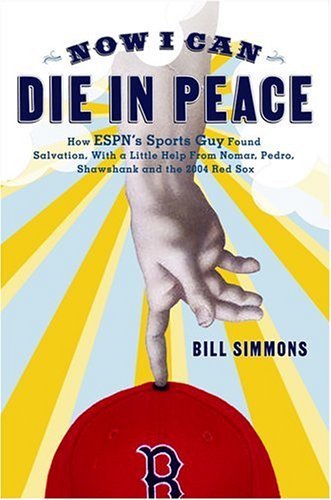
* Anyone who's a sports fan should pick up Bill "The Sports Guy" Simmons' Now I Can Die in Peace. Simmons' gut-busting collection of essays shows what true fandom is like in all its passionate absurdity, without resorting to lame Red Sox underwear jokes or whatever tripe that was served up in Fever Pitch. Simmons chronicles the ups-and-downs of the 2004 Red Sox season, which is undoubtedly more meaningful to Sox fans. But you really just have to be a sports fan with a healthy background in "guy" culture to appreciate Simmons, the funniest sportswriter in the business.

* Btw, I am crushing the $50+5 SNGs on Party Poker. Thanks for asking.

Thursday, December 01, 2005

Dog Bites Geisha

This just in: Memoirs of a Geisha will suck the holy ass. Yup. You heard it here first. Or maybe you heard it somewhere else first, and this is your fourteenth reminder that this movie is bound to suck. But here it is (again). Please be reminded that there's a better chance of democracy flourishing in Iraq in a year than Memoirs being anything other than shitty. Heck, there's a better chance of Lars von Trier's slave epic Manderlay being watchable than there is Memoirs.

Before I continue with the hating, I must first say that I'm not down on this movie's prospects on the grounds that Zhang Ziyi's butt has somehow betrayed 5,000 years of Chinese self-determination. Actually, I'm fine with that. ZZ's butt can do whatever it likes, including, but not limited to, subjecting the denizens of the Middle Kingdom to further humiliation. And unlike my (ethnically Japanese) aunt Mich, who railed against this movie's casting the entire Thanksgiving weekend, I'm not especially offended by the Sino-centric casting choices. Don't Asians all look the same anyway? Lastly, while in the past I've resisted Zhang and her emotional limitations, she's proved herself capable of giving fine performances, at least when she's listening to Wong Kar-wai's marching orders.

So what's the problem? Where to start? Let's see. First, there's Chicago, a film so ineptly directed that you're better off watching your local junior high production. The hack responsible for that embarrassment is at the helm for Memoirs. If his abysmal credentials weren't enough, Rob Marshall's hackery can already be glimpsed in the laughable trailer, which showcases a torrent of derivative Japanese imagery (flat, symmetric compositions! colorful kiminos!) stolen from the likes of late Kurosawa, the Shogun TV mini-series, and The Pillow Book. Egad.

Then there's the notion of a geisha movie for Western audiences. I don't think I'm particularly touchy about implications of cultural imperialism or Orientalism. I laughed off my mom when she told me Crouching Tiger is just a sell-out movie made for Western eyes. But this project just screams cultural sensationalism. Most people don't know what a geisha is. They assume that it's the Japanese for "call girl", but that's not quite what geishas are. They're rarefied courtesans who entertain a certain class of men. Exotic, yes, but geishas do not typically lead the lurid life found in the popular American imagination.

No doubt the geisha milieu can be a fascinating subject for movies. Kenji Mizoguchi returned to that world again and again, coming up with such poignant geisha studies as Sisters of the Gion and Street of Shame. The geisha world fed some of Mikio Naruse's best movies as well, including Flowing, Late Chrysanthemums, and (reputedly) When a Woman Ascends the Stairs. As always, Mizoguchi's concerned with the plight of female suffering brought about by abandonment. Naturally, geisha became a recurring subject for Mizoguchi's vision of women tragically imprisoned by the callous choices of men. Naruse, meanwhile, found the geisha a natural for his examinations into lives of quiet desperation; the geisha house is a perfect microcosm of his vision of a reified world, where personal relationships are defined by the financial transactions between the individuals.

So if you want to watch movies about geishas, why not turn to Japanese masters who know the milieu intimately (Mizoguchi, especially, was known as a frequenter of geisha houses)? It sure beats a bowdlerized Western superproduction helmed by a dude who can't even competently translate to the screen a broadway show about a midwestern American city, right?

Okay, so maybe I'm acting like a big snob. Give it a chance, and who knows? The Red Sox won a World Series recently, so anything's possible, right? Sorry to burst your bubble, but if you're still optimistic about Memoirs, let me direct you to a review from the proudly anti-elitist The Hollywood Reporter, a publication not known for their concern for verisimilitude in movie portrayals of non-American cultures.
The filmmakers have made the characters crasser, they ignore nuances within geisha tradition and give characters attitudes and dialogue highly unlikely for Depression-era Japan. The heroine, who in time becomes a legendary geisha, is modeled in the film more after a willful, modern American teen than a young Japanese woman...She performs a dance on her first night as an apprentice, something that would never happen. She makes sharp ripostes with her rival, dialogue more in tune with a ‘30s American film comedy than ‘30s Japanese culture. A dance performance at one point, choreographed by John DeLuca, feels like a modern Western interpretation imposed on Japanese tradition, more "Chicago" than Kyoto as it were.
When Kirk Honeycutt is dissing a movie for its cultural inauthenticity, you know you're getting the sub-Disneyland version. Remember, the implicit purpose of this movie/book is to provide a revealing glimpse into a secret world. So cultural authenticity is not only important, it's the film's raison d'être.

Yeah, anything is possible, but what are the realistic chances of this movie being any good? Let's be honest. You'll have better odds betting that Tom Cruise will come out of the closet on Christmas Day, 2005.