Wednesday, September 14, 2005

Marty's favorite colors

I don't mean blood-red. To promote something for Philips, Martin Scorsese provided two lists of his favorite color-films, divided Sarris-like, into English-language and non-English. I'm posting it mainly because I find some of the choices bizarre and haven't seen this list linked by anyone else (David Hudson?):


English:
1. "Barry Lyndon" (1975, dir. Stanley Kubrick)

2. "Duel in the Sun" (1946, dir. King Vidor)
3. "Invaders From Mars" (1953, dir. William Cameron Menzies)
4. "Leave Her to Heaven" (1943, dir. John M. Stahl)
5. "Moby Dick" (1956, dir. John Huston)
6. "Phantom of the Opera" (1943, dir. Arthur Lubin)
7. "The Red Shoes" (1948, dir. Michael Powell)
8. "The Searchers" (1956, dir. John Ford)
9. "Singin' in the Rain" (1952, dir. Stanley Donen)
10. "Vertigo" (1958, dir. Alfred Hitchcock)

Foreign:
1. "Contempt" (1963, dir. Jean-Luc Godard)
2. "Cries and Whispers" (1972, dir. Ingmar Bergman)
3. "Gate of Hell" (1953, dir. Teinosuke Kinugasa)
4. "In the Mood For Love" (2000), dir. Wong Kar-Wai)
5. "The Last Emperor" (1987, dir. Bernardo Bertolucci)
6. "Red Desert" (1964, dir. Michelangelo Antonioni)
7. "The River" (1951, dir. Jean Renoir)
8. "Satyricon" (1969, dir. Federico Fellini)
9. "Senso" (1954, dir. Luchino Visconti)
10. "Shadows of Forgotten Ancestors" (1964, dir. Sergei Paradjanov)


Invaders from Mars and Moby Dick would make nobody's canon but Marty's, I suspect. And I've never even heard of this 1943 version of Phantom. Wtf? My overall impression is Marty goes ga-ga for broad melodramas in lurid colors like Duel in the Sun and Leave Her to Heaven, though it's kinda surprising the more accomplished bold melodramas in lurid colors from Sirk and Nick Ray didn't make the cut. Scorsese's possibly trying to promote lesser-known favorites here. Meanwhile, the foreign films betray a strong bias for movies that enforces a strict symbolic color scheme (Red Desert, Satyricon, Cries and Whispers), with an emphasis on primary colors. It's astonishing to see In the Mood For Love in there, but good job, Marty. One question: Is In the Mood the most canonized film since the turn of the century? My impression is yes, but I'm not an unbiased observer.

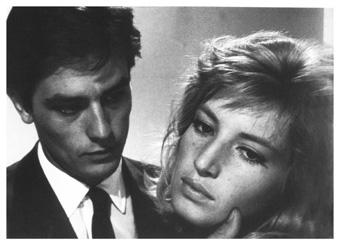
Sorry for another pointless list. A real post will arrive sometime soon, I hope. This is mainly a chance for me to sneak in a still from Contempt.

Saturday, August 20, 2005

Best Year in Movie History?

A couple years back, the Nuart, an arthouse/rep movie theater in LA, put on a series called "1962: Best Year in Movie History," which the programmers posed as a contrarian alternative to the commonly accepted annus mirabilis of cinema, 1939. That program included such immortal classics as The Manchurian Candidate and Lawrence of Arabia. Besides those two standouts, though, it's remarkable many well-known movies screened in that series: To Kill a Mockingbird, Whatever Happened to Baby Jane?, The Miracle Worker, Days of Wines and Roses. Those were screened alongside cineaste classics like Ride the High Country and Bergman's Through the Glass, Darkly (technically a 1961 movie released in the US in '62).

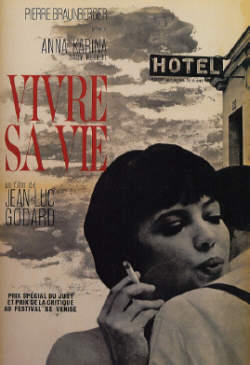
It's a staggering lineup. And that year's made more impressive when you take my favorite movies from that year, Chris Marker's La Jetée and Godard's Vivre sa vie, into account. This, by coincidence, I ended up seeing a batch of movies from 1962, including The Exterminating Angel, Advise and Consent, Hatari!, L'eclisse in that new Criterion edition. That gave me an opportunity to put together a top 10 list for this year for my previous top 10s page. Long story short: while devising that list, I had to conclude that, yes, 1962 is one amazing year for movies, giving birth to this post. I mean, check out this lineup:

01. La Jetée (Marker)
02. Vivre sa vie (Godard)
03. The Manchurian Candidate (Frankenheimer)
04. An Autumn Afternoon (Ozu)
05. Advise and Consent (Preminger)
06. The Exterminating Angel (Bunuel)
07. Lawrence of Arabia (Lean)
08. Knife in the Water (Polanski)
09. Ride the High Country (Peckinpah)
10. L'eclisse (Antonioni)
11. Hatari! (Hawks)
12. The Man Who Shot Liberty Valence (Ford)
13. Cléo from 5 to 7 (Varda)
14. Harakiri (Kobayashi)
15. Le Doulos (Melville)
16. Sanjuro (Kurosawa)
17. To Kill a Mockingbird (Mulligan)
18. Days of Wine and Roses (Edwards)
19. Lolita (Kubrick)
20. Hell is for Heroes (Siegel)

Just off are movies like Sundays and Cybele, Whatever Happened to Baby Jane?, Carnival of Souls, Losey's Eve, and Pasolini's Momma Roma. And the above list doesn't include the various acclaimed movies I haven't seen like Cape Fear, My Name is Ivan, Family Diary, The Music Man, I Fidanzati, Two Weeks in Another Town, These are the Damned, Loneliness of the Long Distance Runner, Zatoichi, The Trial of Joan of Arc, etc.

You might wondering, is there an actual point to this post besides nerdy navel-gazing on the level of an Auteurist Zombie thread? Well, not really. But I'll posit a theory to avoid the stench of unmitigated navel-gazing: It's true that using these "greatest year" debates rely on something essentially arbitrary -- the calendar year as the time interval of measurement. It's probably more instructive to look at a "great" year as a peak of a golden period, a burst of creativity and accomplishment that might last anywhere from two to five years. 1962, like other commonly-cited great years such as 1955, 1974, or 1939, aren't flukes. Those years instead mark a crest in an uncommonly fertile period for movies. For me, the early 60s stand out as the peak period for cinema because it's at the nexus of a number of developments: you have the Nouvelle Vague just exploding on the scene, the "mature" (not quite "late") period of classic Hollywood auteurs, the transition point between the Old Japanese Masters and the Japanese New Wave, and the intersection of Italian neo-realism and the Italian new wave, and generally a much greater willingness on the part of filmmakers to tackle political material. The remarkably fecund early Sixties marked a transition from an art form's classical period to its modernist period, a tantalizingly brief window of time where Ford and Godard share movie marquees.

1962 is the peak of that awesome period. That year included many elegiac, autumnal pictures like Ozu's last movie (appropriately titled) An Autumn Afternoon, John Ford's last great western Liberty Valence, Hatari!, which is probably the purest "Hawks movie" Hawks ever made, and his last great picture. Kubrick, Polanski, Bertolucci, Pasolini, and Peckinpah were just starting out, with both Polanski and Peckinpah making one of their very best. Bunuel made arguably his greatest picture The Exterminating Angel, the most potent lampooning of bourgeois dependence put on film. The two great modernist masters, Antonioni and Godard, were operating at the height of their powers. And the two most incisive, urgent political movies to ever come out of Hollywood were from this year: The Manchurian Candidate and Otto Preminger's compulsively watchable Advise and Consent, my pick as the most astutely observed movie about American politics ever made. And Jack Lemmon boozed it up and Bette Davis camped it up in two of their most memorable roles. It's a list filled with masterpieces and near-masterpieces, with some signature works by the artform's most luminous practioners.

So there you have it: an airtight case for 1962 as the greatest year in movie history. Your favorite movie year just doesn't match up. Sorry, nerd.

Thursday, August 18, 2005

The Wrigley Building, the Union Stockyard, and Big Heads

Two years ago, when my cousin got hired by a graphics design outfit based in Chicago, he asked me what my impressions were of the Windy City. I immediately told him the key fact: "Chicago's a city where people have big-ass heads. I mean huge!" I held out my hands and gestured like I was picking up a watermelon. "This big," I exclaimed. He gave me a puzzled look as I launched into a wild soliloquy, describing the preternaturally large head of Mike Ditka, who's the patron saint of Chicago, theorizing on the relationship of the Midwestern diet to head size, and advancing pet ideas concerning Polish ancestory's effect on head size. After my ten minute presentation, looking bored and skeptical, my cousin replied, "okay, I'll look out for it." Four months later, when he came back for a visit, he told me excitedly that I was dead on, that there are indeed an alarmingly large number of big-headed people in Chicago. And he couldn't for the life of him figure out why this is so.

I hadn't thought about this fascinating question in a while, until that last steroids post. Today I began to wonder anew: what accounts for Chicagoans' humongous heads? Heads the size of that red rubber handball that I played with in 2nd grade. Heads so wide that the ears reach the vertical plane of the shoulder blades. Is it an evolutionary mutation to protect the brain against the heavy gusts coming in from Lake Michigan? The aforementioned a 12" pizza for dinner diet?

Inquiring minds want to know.

Other pressing questions of the Age: why are so many young Latino men completely obsessed with fey British troubadour Morrissey? Do Asians have a genetic predisposition to like Erasure?

Wednesday, August 17, 2005

HOFfing with Smoltzy

Anabolic steroids. It enhances muscle mass, aids muscle recovery, slows down the effects of aging, and gives you some seriously nasty backne. It also shrinks your testicles. The president has spoken about it. Kids have died from overdose. But what concerns me most about steroids aren't the health issues, dangerous as it may be. It's that rampant steroid use by baseball players has fucked up the favorite parlor game for baseball statheads, Who's a Hall-of-Famer?

Before the steroid era, you've got some simple benchmarks for induction into the Hall of Fame: 300 wins, 3000 hits, and/or 500 homers will get you in. Short of that, the voters will look at whether you were a dominant player for a long stretch, or an all-star-but-not-quite-MVP material for an even longer stretch. It's harder to evaluate those essential qualities, though primo stathead site Baseball Reference gives you four different metrics to evaluate potential HOFers.

However, BR has not yet incorporated the new cutting-edge "metric," which is hat-size-to-home-run-ratio. Example: you start out donning a size-7 baseball cap, and after five years of mysterious head-growth, you're now at a Charlie Brown size-8. Well, bud, not only do you start looking like a big-headed doofus, your 550 homers might not cut it. (625 homers should be the bare minimum for 1 hat-size increase over five years.) Seriously, I don't know that Mark McGwire or Sammy Sosa deserve entry into the Hall, given that their credentials -- unlike, say, Barry Bonds' -- depend entirely on their career home run totals. And those dinger totals are more than likely padded by the Juice. Raffy, of course, is also on the fence, mainly because unlike Sammy and Big Mac, Palmeiro was never a dominant player. He was a pretty good player who somehow become a hall-of-fame candidate when his career took a big spike while the man's in his early 30s. Frank Thomas, I think, has a better case.

You see where this post is going, but I'm gonna make an abrupt detour and look at pitchers, particularly the one who intrigues most: John Smoltz. Smoltz has been a dominant pitcher, but only spottily so. He's finished in the top 5 Cy Young voting three times, but failed to finish in the top ten in every other season. He's won the Cy outright in '96, has been a dominant closer, and boasts a glittering postseason ERA. But he's also been injured too many times, and will be lucky to reach 200 wins/3,000 KO, which puts him where almost-HOFers like Curt Schilling and Mike Mussina are. However, he's notched 150+ saves, and will probably go back to closing before his career ends. As Jack Morris is in the HoFer debates now, Smoltz will be the subject of the most furious and interesting debates when he's up for induction. (Schilling is a no. Mussina, if he has two or three more good seasons, a yes.) It's no surprise then that, on BR, his numbers show Smoltz has reached HoF levels by two metrics, but not so by two others.

Smoltz is back starting and doing well, but I think he needs at least three more solid seasons to be a strong candidate. The Hall's tougher on pitchers (no surprise since pitchers tend to have shorter careers and suffer greater risk of injury) as the inductee list shows. If we're lucky, perhaps five or six active pitchers over 30 will be HOFers one day. The Rocket, Greg Maddux and Pedro are locks, and the Big Unit and Mo Rivera near-certainties. Glavine will probably eke out 300 wins and get in, Don Sutton style. That leaves Smoltz, Schilling, and Mussina as the marginal candidates, guys who were star pitchers, but not quite the all-timers that belong. I wouldn't bet against Smoltzy (one of my favorite pitchers), but he needs to kick ass a few more years.

Speaking of the Rocket, I am in fucking awe. The man is having one of the best seasons ever. His ERA is at a Bob Gibsonesque 1.32. He may well post the lowest adjusted ERA+ (ERA relative to league ERA) post-1900, the best single stat in determining pitching performance. If Roger keeps it up, he'll surpass Pedro's inhuman 2000 season (currently the best adjusted ERA+ year, post-1900). ESPN posted a poll asking if this is Roger's best season ever. The other choices were:

Year W-L K ERA

1986 24-4 238 2.48 Cy Young and MVP
1990 21-6 209 1.93 1st sub-2 ERA by a starting pitcher in over ten years.
1997 21-7 292 2.05 Cy Young and pitching triple crown.

As good as Clemens has been over the years, to possibly post a sub-1.50 ERA at age 43 would be a greater accomplishment than even those great seasons. Due to the total lack of run support, Roger probably won't win the Cy since he won't finish with more than 15 wins. I guess that would be poetic justice for having snatched the Cy away from Randy Johnson last year due to generous run support. (Run support is beyond a pitcher's control, buds. ERA isn't -- mostly.) The Cy Young voters might be braindead, but that doesn't diminish Clemens' likely-to-be-historic season.

[Just as I post this, there's a rumor apparently going around the ESPN studios that Clemens has been busted for 'roids. Man, I hope it's not true.]

Thursday, August 11, 2005

Campaign 2008

[Had this in the queue forever. Might as well posted it now as I'll be offline for the next three days.]

Over on Tradesports, where you can bet on (I mean, bid on the futures contracts of) presidential contenders, Hillary is a prohibitive favorite to win the Democratic nomination, while the GOP contest looks to be a neck and neck race between Reaganite-wingnut George Allen of Virginia, wingnut suck-up Bill Frist (now in trouble over his stem cell flip-flop), and John McCain. My dream: the GOP puts up Dick Cheney. And reportedly, Bob Woodward thinks it's gonna happen! Yes!

A tip[1]: the 98:1 contract on the non-major party candidate winning the presidency is a bargain. A not implausible scenario in 2008, promoted by McCain staffer turned centrist Dem blogger Marshall Wittman, finds McCain losing a nasty GOP primary battle to a wingnut candidate (probably Allen or Frist) in a climate of economic anxiety. Knowing that 2008 is his last chance for the White House, McCain launches a third party candidacy in May, picking up a fellow maverick like Bob Kerrey, Joe Lieberman, Giuliani, or some nominally Democratic businessman-celebrity (Warren Buffett?) as his running mate. Running on a platform of national unity, independents, centrist Democrats, and most significantly, libertarian and moderate Republicans flock to the McCain candidacy. A 39/30/30 race develops, with McCain dominating the center and finally cobbling together 270 something electoral votes from mainly blue states and western red states. Improbable? Yeah. It's a fanciful scenario. But I think there's better than a 98-1 shot of this scenario happening, mainly because McCain clearly wants to be POTUS, and he's got little shot of winning the GOP primary with the Dobsonite fundies pulling the strings. A third party candidacy, in the mold of his idol Teddy Roosevelt, might be his best bet. And with the internet making it much easier to raise funds and organize the grassroots, the lack of a party structure wouldn't be the disadvantage it was to other third party candidates like Perot. It's surely a better bet than Colin Powell becoming the 2008 Democratic nominee, which is close to the same price.

It's early, but better to think about this now than dwell on the continuing disgrace of the present administration. Heck, there's a blog devoted to 2008 already. Stories about would-be contenders trickle out every day. So here are my current rankings of the Dem 2008 field (currently, the futures market has the Dem candidate a slight favorite in the general election over the Republican nominee). My priorities are: (1) electability; (2) electability; and (3) electability. Or, "Just win, baby." It's not that I don't care much about ideology -- I would strongly prefer a Clintonian-type pro-free trade moderate -- but there are no issues I care about more deeply than preventing the Repugs from fucking up the country for another four/eight years.[2] And any of these guys will be better than anybody the Republicans put up.

Hillary Clinton, Sen-NY. (Horse race position: 1) (My own preference rank: 7)
In her corner: After eight years of the catastrophe called the Bush presidency, the country may feel nostalgia for the prosperous if decadent Clinton years. Plus: 8 years of distance from wet cigars; the current health care crisis may make Hillarycare look like a tragic missed opportunity; her largely moderate Senate record; and the Democratic Holy Grail of waking up those millions of single women nonvoters, the equivalent of Karl Rove's 4 million evangelicals.
Points docked for: 45% of the country will not vote for her even if the other choice is Osama, so she has little margin for error. She'll be a lightning rod for the right-wing, driving up wingnut turnout and fundraising.
My take: Can only win if there's a massive GOP backlash or if her opponent is Dick Cheney. Besides the polarization problem (which Dubya himself conquered in 2004), she's not a dynamic speaker or an appealing personality (though I personally find her appealing). And I don't really believe that this country will vote a woman in as President in wartime.

John Edwards, former Sen-NC. (2) (3)

In his corner: Still the guy who can best tell you what the Democratic Party stands for. A natural born politician. Charismatic, disciplined, and with high name recognition, the reasons why Kerry tabbed him as VP still make him a formidable 2008 candidate. Now he's got national ticket experience . All he needs is to get some ingenious plastic surgeon to plant some "distinguished"-looking wrinkles for that extra gravitas-inflating touch.
Points docked for: "Breck girl" is still a little lightweight and too slick. And being a guest blogger for 4 years isn't gonna cut it.
My take: Tall order to keep himself visible the next two years when so many bigwigs are looking to get in the race. Still a solid candidate with discipline and optimistic vibe.

Al Gore, former VP. (3)(4)

In his corner: He wuz robbed. New "Fighting Al" persona much more genuine and likeable than the stiff technocrat he was as VP. Also, Bush's awful record makes Gore look that much better. In the Past Elections Reference Game, 2008 may well echo 1968: Like Nixon, Gore's the VP of an administration presiding over prosperous country in after the middle the opposing party's dominant cycle (Dems from 1932-1968)(GOP 1968-2008). He lost a close, possibly stolen election as standing VP 8 years before. 8 years later, the ruling party has become entrenched, corrupt, incompetent and the country's mired in an unpopular war led by an unpopular president. Too bad "Gore, the Democratic Nixon!" won't make a winning campaign slogan.
Points docked for: might be viewed as a has-been. He's a big target: Repugs will make headway painting Gore as both an opportunistic chameleon and liberal kook. If Clinton nostalgia drives the Dem primary voters, Hillary's more likely to be the beneficiary.
My take: Gore's much more comfortable in his own skin now, making him a better, more natural politician. But will voters give him a second chance? Gore's also the least likely to throw his hat in the ring of the top 8 contenders.

John Kerry, Sen-MA (4)(9)

In his corner: Ran an honorable campaign. A steady, stolid presence who's earned some goodwill from the party and at least can get 48% of the vote. He's got the organization in place for another run.
Points docked for: He had his chance and couldn't close the deal on a winnable race. East Coast cultural elitist persona still a huge, huge liability, especially since he personifies everything middle America distrusts about Democrats.
My take: Nice try in 2004, buddy, but give it up.

Evan Baye, Sen-IN (5)(10)

In his corner: Mr. Bland Moderate. Won landslides in a solid red state. Pretty much the perfect middle-of-the-road candidate manufactured to compete strongly in swing/red states.
Points docked for: Bland, uninspired speaker. Has a blow-dried politico from casting call quality. Will not excite anybody, and parrots right-wing talking points. Senator = Kiss of death.
My take: More than anything, Dems need someone who appears authentic and stand for something, not another poll-tested triangulator. Baye is the sort of faux "electable" wishy-washy candidate who appeals to CW Beltway media that the Dems are way too fond of sucking up to. Your party is widely perceived to not stand for anything. So what do you do? Try at least to not nominate a robotic, focus-group tested pol like Baye.

Mark Warner, Gov-VA (6)(5)

In his corner: Super-popular Virginia governor proves a Democrat can still stomp in the South. NASCAR-lovin', gun-totin' persona and moderate pragmatism may put some red states in play. Virginia is poised to become a key swing state. Pretty much defines a solid, electable Democratic candidate as moderate Southern governor is the proven winning formula for the donkey. Talks pretty good sense. Can fund himself.
Points docked for: Not much experience and looks far more like an Intel VP than the President of the United States. Will be out of office by '06, unless he makes a Senate run.
My take: A lot of insiders have been recently infatuated with a Warner candidacy, but let's wait and see. From what I've read, a perfectly fine candidate. Also, he's the most logical non-Hillary to emerge at this point, which would be a great asset if the race develops as CW predicts (as a race between Hillary and the Hill-alt).

Bill Richardson, Gov-NM (7)(6)

In his corner: Charismatic Latino governor from a swing state, with as impressive a resume as anybody in the field. His candidacy may finally solidify the fast-growing Latino population as dependable Dem voters. What's not to like?
Points docked for: Are Americans ready for a half-Latino Prez (I don't think so). Skeletons in the closet? Couldn't deliver NM for Kerry.
My take: A great VP choice on a dream Obama/Richardson '12 ticket if the Dems lose again, but there doesn't seem to be great enthusiasm for his '08 candidacy.

Wes Clark, Ret. Gen. (8)(1)

In his corner: Was right on Iraq from the start! Right on Iraq. Right on Iraq. Still the best biography around, and more than anyone can close the supposed "national security gap" with the GOP. Also, Clark's one of the rare Dem commodities: a guy who can stand his ground and be strongly partisan without being seemingly too "liberal". Also, right on Iraq. How many other people in this field can say that? If Iraq quagmire continues, his (fairly consistent) Iraq position will be a big plus.
Points docked for: Has he learned to blink? Can the thin-skinned general survive another arduous campaign? Might be seen as a one-shot wonder.
My take: Dismissed by the mainstream media but wildly popular in the liberal blogosphere (he's been winning all the lefty blogosphere straw polls, like the recent Kos poll). I'm sorry I missed his fundraiser in LA two months back, but all reports are that he's dramatically improved from 2004. Still my man, and never moreso than now as the designated Dem national security spokesman launching trenchant critiques of Administration boneheaded policies on Iraq on a weekly basis.

Russ Feingold, Sen-WI (9)(8)

In his corner: The Democratic version of John McCain - a likeable maverick. Right on the war. And of course, right on the war.
Points docked for: Too principled to get elected? Also, senator = kiss of death.
My take: I have nothing against Feingold, one of the most admirable politicians on the national scene, and I give bonus points to any politician with the cajones to oppose the Iraq invasion from the start, but I'm not convinced he's electable.

Brian Schweitzer, Gov-MT (10+)(2)

In his corner: Kos thinks he's the party's best bet: a folksy, gun-lovin' charismatic rancher who can relate to middle America and neutralize the coastal elite stereotype. Check out this terrific Salon interview for more ("They look up there and say, "That guy's a straight shooter. If I wasn't so busy bowling and working and fishing, and if I had time to spend on these issues, I bet I'd come to the same conclusions that that guy would. But it's a good thing that he's doing all that studying and stuff, because I'm busy fishing and bowling.") -- the dude makes sense. Proves he can win the libertarian Western states (the most promising region for Democratic gains in 2008) by winning in Deep Red Montana. Guy's even lived in the Middle East and speaks Arabic!
Points docked for: The governor of Montana as leader of the free world? You might as well elect the mayor of Akron.
My take: exactly the kind of small-state governor Dems like to nominate, and the kind of personality they need in this era. If Schweitzer has no major skeletons in the closet, he'd be the ideal "electable" Democratic candidate in the next two election cycles.

No-mentum: Joe Lieberman. No chance: Joe Biden.

[1] Pigs & Battleships does not encourage or otherwise endorse gambling in any form. However, this new weblog from Gawker Media, Oddjack, does. Go there for gambling related nonsense.

[2] My ideal candidate is one who has four priorities: (a) aiming to win the war against Islamo-fascism through a combination of effective military strategy and "hearts & minds" approach (and avoid launching costly wars against toothless distractions); (b) is a deficit hawk; (c) is looking to implement a national health care plan; and (d) is seriously committed to a alternative energy sources and environmental protection. Everything else is window dressing.

Friday, August 05, 2005

local matters

* L.A.-area movie nerds oughta subscribe to Film Radar, if they haven't done so already. Film Radar is a one-stop source for arthouse/revival movie listings, and if you're on the e-mail list, you often get invited to free screenings. Karie Bible, who runs the site/list, also organize movie nerd outings. Also, it's good for girlfriends of said nerds to subscribe, if only so they know where their boyfriend is supposed to be that night. ("Nice try, but according to Film Radar, the Ermanno Olmi double-header screens next week. And why do you have so many one dollar bills in your pocket?")

* For urban planning movie nerds (Adam?): my friend Julie needs your help. She's trying to program a film series about "homelessness, displacement, and gentrification", which will be shown to L.A.-area youth. She needs movie suggestions, and the films should be fairly accessible. The movies posted on the blog thus far sound like titles from Jonathan Rosenbaum's DVD collection, with Bresson's Mouchette and Vigo's Apropos de Nice listed, along with more on-point movies like City of Hope and Public Housing. Surely someone can help. If you have any ideas, go to the project's blog and post some recommendations. Or you can post nonsequitur remarks about how La Promesse rules. That's always a fun thing to do during a work break.

* Lastly, LA Times media critic David Shaw died of a brain tumor this week. He was the most provocative regular columnist for the Times, and his often astute, sometimes just plain cranky commentary will be missed.

Friday, July 29, 2005

5 x 3

5 recent viewings

War of the Worlds (Spielberg): B

The plant & payoff I expected never arrived: Tom Cruise, the gearhead with an engine on his kitchen table, did not miraculously locate a mechanical weakspot in the tripod and used that knowledge to defeat the aliens. Good job sticking to the ironic H.G. resolution. And the first hour is sheer sustained brilliance: like the devastating first act of The Pianist, you're put in the middle of an unfathomable assault on humanity, viewed through the eyes of one man. At its best, War is a totally immersive vision of a Hobbesian state of nature. Coming out of the movie, I can't help but ponder what a pittance my daily problems (that day it was losing my car keys) are when set against the possibility of civilization rupturing at the seams.

A pity the movie faltered so badly down the stretch. War ends up as a typical "late" Spielberg: superb visual storytelling of dark material that's undermined by a roasted marshmellow core. As with most of his recent works, Spielberg's unable to think through his premises and abandons the darker implications of his story in favor of canned explorations of the absent father/mother theme -- subjects on which Stevie has absolutely nothing left to say. Outside, tripods are disintegrating human flesh. In the basement, Cruise is trying to be a better father by singing lullabyes. Hackneyed development of "auteurial concerns" aside, the [SPOILERS!] Cambridge reunion ranks with the AI coda (sorry AI apologists, it's as "dark" as my bare ass), the Saving Private Ryan bookends, and Amistad's "give us free" as Spielberg's nadir -- they're scenes which betray an incorrigible taste for wishful thinking and hokey sentimentality. Also, note to Janucz Kaminski: Your trademark creepy backlighting is not needed to turn Dakota Fanning into the most freakish looking 11-year-old on earth. She already is. Thanks. (She has the mien of Bette Davis's Baby Jane aged backwards to eleven. Creepy as all hell.)

Land of the Dead (Romero): B+

20 years from now, when scholars dig through the cultural detritus of the Bush era, they would be well-served to ignore the 300 cheapo lefty docs on the shelves in favor of Romero's latest zombie movie, which is as potent a movie about the Iraq mess as one can imagine. The Green Zone. Abu Ghraib. Military contractors wrecking havoc. Relentlessly murderous insurgents with inchoate motivations. It's all here, and not done with a heavy hand. If only the actual zombie movie on the surface was more involving, we'd have an all-timer like Dawn of the Dead.

The Forest for the Trees (Abe): B/B-

Just moved to a new place and having trouble fitting in? Watch this movie and you'll discover every possible permutation of outsider alienation. Too mousy to rein in your students? Too idealistic and pompous to win over co-workers? Too socially awkward to mesh with the cool locals? Too socially unaware to not better disguise your stalking of a new friend? Like an adult version of Welcome to the Dollhouse, this theater of humiliation is well observed and ends well,but doesn't completely work -- mainly because it's grindingly repetitive but also because the heroine's behavior just wasn't very convincing. She alternately acts like someone who knows social rules but lacks social graces (making obvious lies to try to cover up her stalking) and someone utterly ignorant of social convention (hounding her New Best Friend as soon as she gets in her house door over the phone). Social nincompoops tend to be one or the other. Unless, of course, that social nincompoop happens to be a character in a movie that demands a progressively worse humiliation in each new scene.

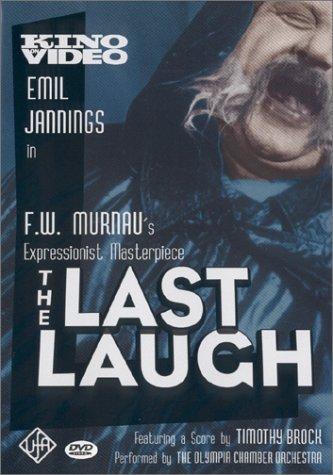
The Last Laugh (Murnau, 1924): A [w/ J.Rocc]

Purists might object to the LA Film Fest's program featuring live DJ scoring of silent classics in the majestic outdoor setting of the Ford Amphitheater, but a few missteps aside, I thought local DJ legend and Beat Junkie J.Rocc's live score of Murnau's silent classic was witty and thoughtful, if somewhat anachronistic. He'd have to starting mixing in Ja Rule to detract from Murnau's most expressionistic work, which ranks with Emil Jannings' The Blue Angel as the apogee of cinematic humiliation narratives. The centerpiece, a nightmare in which the gargoyles in the neighborhood go US Weekly on fallen doorman Emil Janning's ass, may be the greatest strech of filmmaking in Murnau's brilliant body of work and the most horrifying depiction of social humiliation put on film.

Howl's Moving Castle (Miyazaki): B+

So what if he's stealing from himself? Hey Ya! Miyazaki is one of a kind, and his latest visionary movie re-assembles previous Miyazaki tropes (castle, alienated girl, effete flying spirit guy, weird little creatures, transportation device that's "alive," pacifist message, stunning 19th century Dutch-looking cityscapes) to come up with a movie that's mostly involving and always stunning to behold, especially the background mattes of the Euro-city and the flower field.
Doesn't make a whole lotta sense and the ending's too maudlin, but it's awfully churlish to complain when you get cool shit like that transporting door or the awesome dog?

5 recent listens

Architecture in Helsinki w/ Scrabble @ The Echo - June 29, 2005

Cutesy childhood ditties shifting suddenly into emo navel-gazing that finally careens into anthemic catharsis. Architecture in Helsinki, like The Fiery Furnaces, are at the forefront of indie eclecticism -- and their show was a blast whenever they didn't give in to self-indulgence, as when the lead singer suddenly veers from delicate Belle & Sebastian whimsy to aping gravel-voiced Tom Waits in the same stanza. The raucously anti-harmonic horn section reminded me too much of the Stanfurd Marching Band for comfort, but overall I had a good time. As for the opener, Scrabble's songcraft and arrangements have gotten more sophisticated since the last time I saw them, but the sound system didn't treat 'em right that night.

David Byrne and Arcade Fire @ Hollywood Bowl - June 26, 2005.

Alternate title: Me and You and Everyone We Know. Half of LA was out for this show, and Arcade Fire stepped up to the challenge. Opening their set with the can of whupass that is "Wake Up", they just absolutely rocked the Bowl with that dense 9 piece sound, which included eight songs from Funeral and two new songs, and finishing the twin killing of "Tunnels" and "Power Out". In between, just sheer euphoria including a wrenching rendition of my favorite AF song, "In the Backseat", a song of shimmering, fragile beauty. David Byrne, decked out in a pastel pink suit, had a hard act to follow; first half of the dude's set was his solo stuff, which marries arch, child-like character sketches to an afro-beat sound. It was only when he broke out the Talking Heads' greatest hits ("Psycho Killer," "Burning Down the House") that the joint started buzzing, and the finish, a cover of Beyonce's "Crazy in Love," backed by a frenetic marching band, was against all odds, fucking awesome.

Guero, Beck

As many reviews have noted: Guero:: Odelay as Sea Changes :: Mutations. This is the first Beck album that doesn't surprise. I enjoy the experiments with latin rhythms and bossa nova beats, but mainly, it's Odelay redux. But what's wrong with repeating what's worked, even when you're Beck? Favorite tracks: "E-Pro" (so it sounds exactly like "Devil's Haircut"...your point is?) and "Girl".

Demon Days, Gorillaz

Fuck Blur. Gorillaz is where it's at. This sophomore album does what "side projects" do best -- takes chances, drains out the fat, and best of all, leaves the whiny posturing of 90s Britpop behind. This is just make catchy, funky pop. The production is less adventurous in this new album, the by-product of replacing beat genius Dan the Automator with the hyped-but-predictable DJ Danger Mouse, but they hit some smokin' highs here, including the Kanye West-inflected "Kids with Guns" and the killer bass line of "Every Planet We Reach is Dead." No sophomore slump here.

Be, Common

People who only listen to skinny sensitive white boy music are lame. Here's one reason why.

5 recent reads

Harrington on Hold'em, Vol. 2 - Endgame, by Dan Harrington and Bill Robertie.

Far and away the best book I've read on NL Hold'em play. What's great isn't learning new ideas, but the way Action Dan lucidly applies advanced NL principles to specific situations. Remember the pre-flop re-raise Action Dan made w/ 6-2 in the 2004 WSOP, getting AQ (David Williams) and an EP raiser (Josh Arieh) and MP caller (Greg Raymer) to fold? Genuflect before the intricate reasoning Dan goes through to arrive at this textbook "Squeeze Play" with everything on the line. Learn about the "M" and "Q" and making moves in the orange zone. Unfortunately, everyone else is doing the same: I see that both volumes of Harrington's treatise are on the Amazon top 50 bestseller list, ahead of David Sedaris, Jared Diamond, etc. Putting aside what that says about the poker craze, widespread dissemination of these potent ideas is definitely -EV, as poker nerds might say.

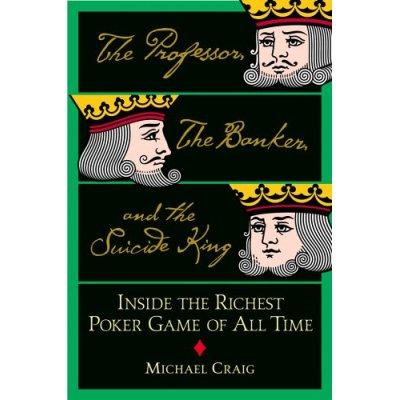
The Professor, the Banker and the Suicide King: Inside the Richest Poker Game of All Time, by Michael Craig

Aspires to understand what makes the gambling mind tick, but Craig's much better when he drops the half-assed psychological musings for narrative. Andy Beal, a rich banker, challenges some of the greatest poker players in the world, including Doyle Brunson, Chip Reese, Jennifer Harman, Howard Lederer, et al. to games that reach $100,000/200,000 limit heads-up. Good to know that even the most famous poker pros lead crazy, rollercoaster lives, but Craig could never really get inside the action, and so the book's like a kung fu movie with the final confrontation cut out. You just don't get a sense of how the players played. A good glimpse into the lifestyle and relationships of these poker pros, but not enough game.

Freakonomics: A Rogue Economist Explores the Hidden Side of Everything
By Steven D. Levitt and Stephen J. Dubner


I'm only about halfway done with this book-of-the-moment, a pop econ tract that deals largely with the effectiveness of incentives as it's applied in weird scenarios -- sumo wrestling, KKK, etc.. Levitt's main concern is setting up incentives that would encourage or discourage cheating, but none of the revelations I've seen so far justifies the hyperbole of the subtitle. (But of course, I'm biased in that I find economists too often presume too much rationality in the decision-making and behavior of human actors) Thus far, Levitt lays out a lot of counterintuitive-but-not-so-upon-reflection points that's interesting but not mindblowing. Still, I'm glad to see someone put down real estate brokers (the real leeches of society). And I await the chapter that outlines his most provocative thesis, that legalization of abortion has brought down the crime rate (something I've always thought was intuitively correct, but glad to see some supporting data on).

Countdown to a Meltdown, by James Fallows in the Atlantic Monthly.

In a fictional memo to a 2016 presidential candidate almost certain to win, Fallow lays out an apocalyptic scenario tying together Iraq, currency policy, budget deficits, oil supply cutoffs by Hugo Chavez, China cashing out government bonds, environmental disaster, the real estate bubble, and our lagging education problems into a domino spiral. There's a terrifying logic to the scenario outlined therein that's all too plausible. And here I thought I was pessimistic about where the country is headed.

Climate of Man
by Elizabeth Kolbert in The New Yorker. Part 1, Part 2, and Part 3. (Thanks to Phil in the comments section for the assist.)

Do yourself a favor. Print out all three parts, preferably on recycled paper. Or maybe the backside of drafts you were meaning to trash. Read all three parts. Thank you. Unless you've read it already, then which, holy fuck, this is some scary shit, eh?